
When someone searches “where should I sell my gold and silver, and for how much?” the obvious reference point is the spot price to a coin shop, estate buyer or a wholesaler. But spot is not the same as a cash offer.
A coin shop, estate buyer, wholesaler or a refiner normally has to buy 30% to 40% below its expected resale value to cover testing, processing, price risk, overhead, and for them to make profit.
Jason Suderman of Lifecycle Pro Estate Liquidators, with decades of experience in the industry, said "Some refineries stopped buying for the past few months until things level off economically worldwide. Last fall we saw a moratorium go into effect on refinery purchases until March. So wholesalers buyers, having to hedge the purchase out of pocket, offer low buy out prices to cover their risk."
An open online auction works differently. It can put collectors and end users, not only professional resellers, into direct competition. Those bidders may value the maker, design, history, or scarcity in addition to the metal. A case study of this recent BidRush online auction provides a useful real-world test of that difference.
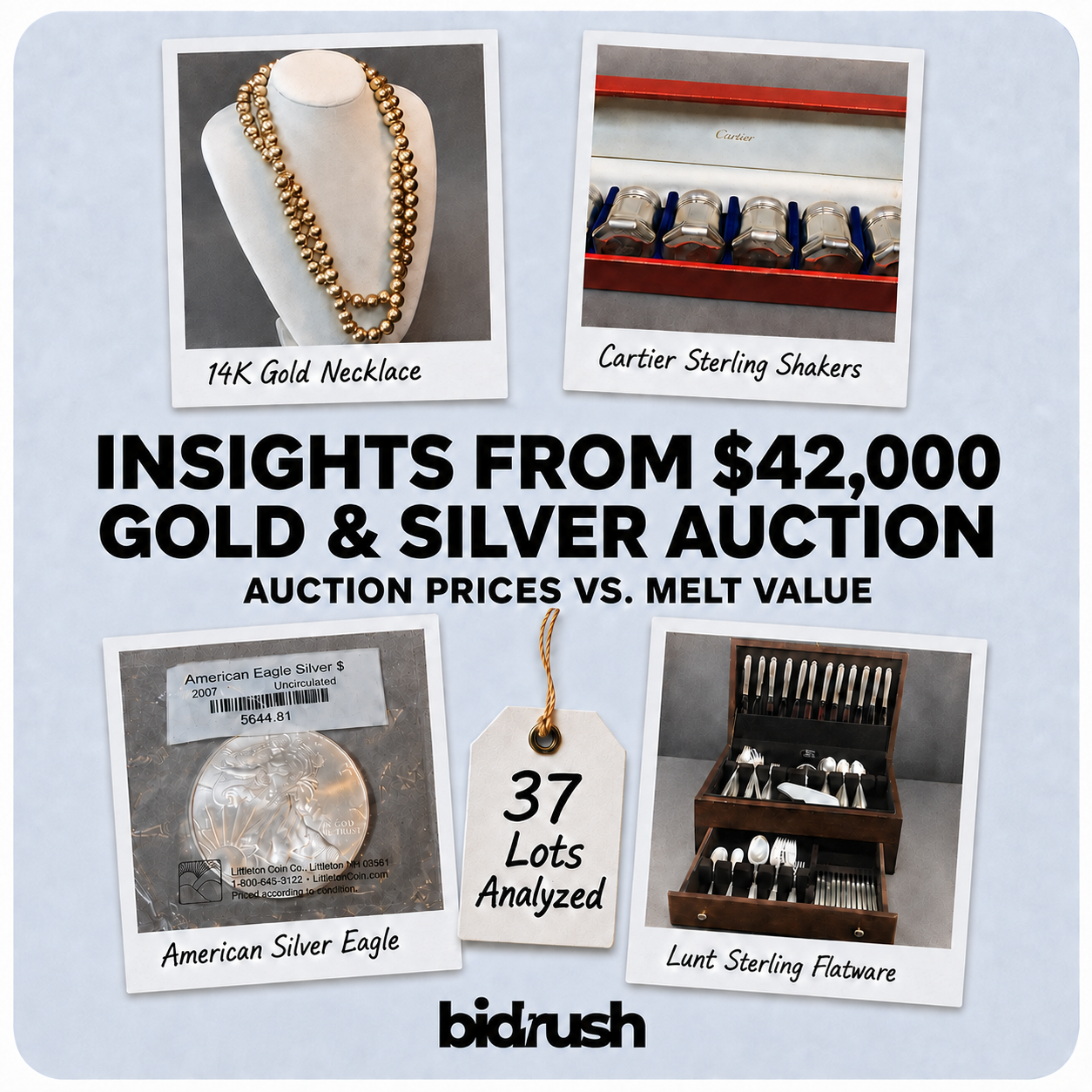
We compared every applicable precious-metal lot in a recent BidRush estate online auction with the gold or silver spot price near the auction close. We then added the 13% buyer's premium (which goes to the partner) to show what bidders actually committed before tax.
The Results at a Glance
“The client couldn’t have been happier with his net return after fees with BidRush. A jewelry buyer likely would have paid 30% to 40% below melt value. He was so pleased with the auction results that he gave us the rest of his gold and silver to sell!” — Jason Suderman, Lifecycle Pro Estate Liquidators
- 37 comparable precious-metal lots
- 11 lots sold above estimated melt value after the buyer's premium (which goes to the partner)
- 16 lots reached at least 90% of estimated melt value
- 29 lots reached at least 80% of estimated melt value
- Total closing bids: US$34,963 (C$49,585)
- Buyer total before tax, including the 13% premium: US$39,508 (C$56,031)
- Estimated melt-value ceiling: US$46,261 (C$65,608)
- Overall buyer commitment: 85% of the estimated melt-value ceiling
Note that several catalog weights included jade, stones, pearls, shell, mirror parts, marcasite, or other non-precious material. Treating those gross weights as precious metal intentionally overstates melt value.
Lot-by-Lot Results
For each lot, “percentage of melt” means the buyer's total after the 13% premium divided by the estimated melt value. A result above 100% means bidders committed more than the item's estimated metal value.
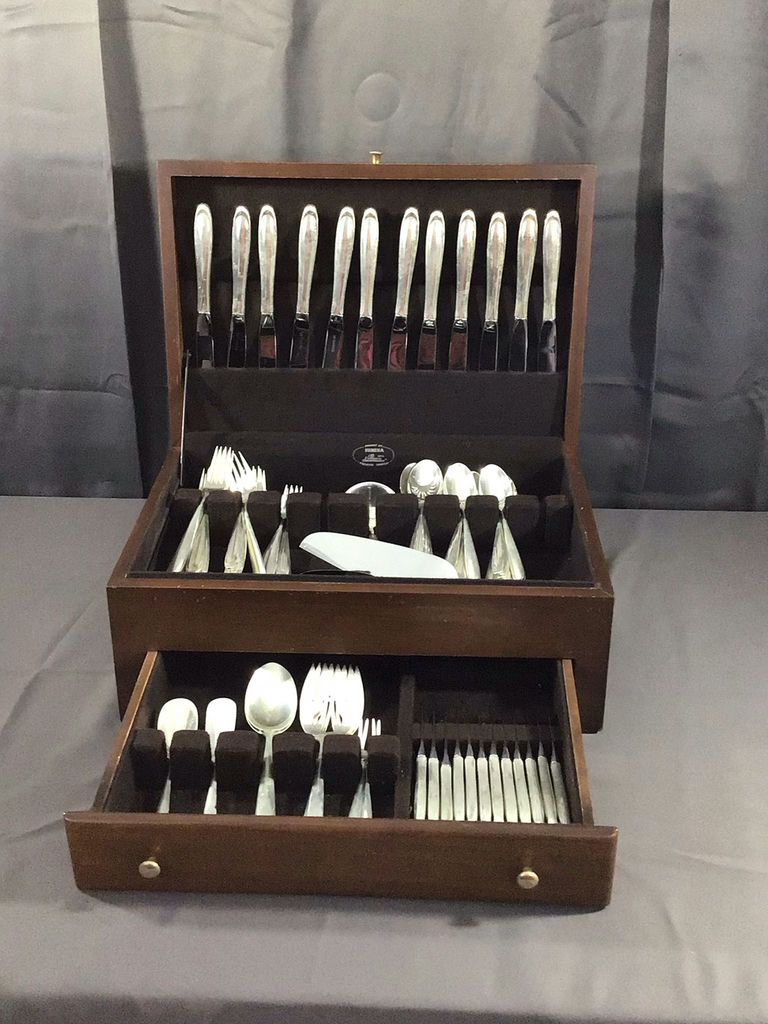
Lot 112: Lunt sterling flatware service
Estimated melt value: US$5,576 (C$7,908)
Closing bid: US$4,272 (C$6,059)
Buyer total with 13% premium: US$4,827 (C$6,846)
Result: 87% of estimated melt value
Calculation note: 2,039 dwt of solid sterling; weighted-handle pieces excluded.
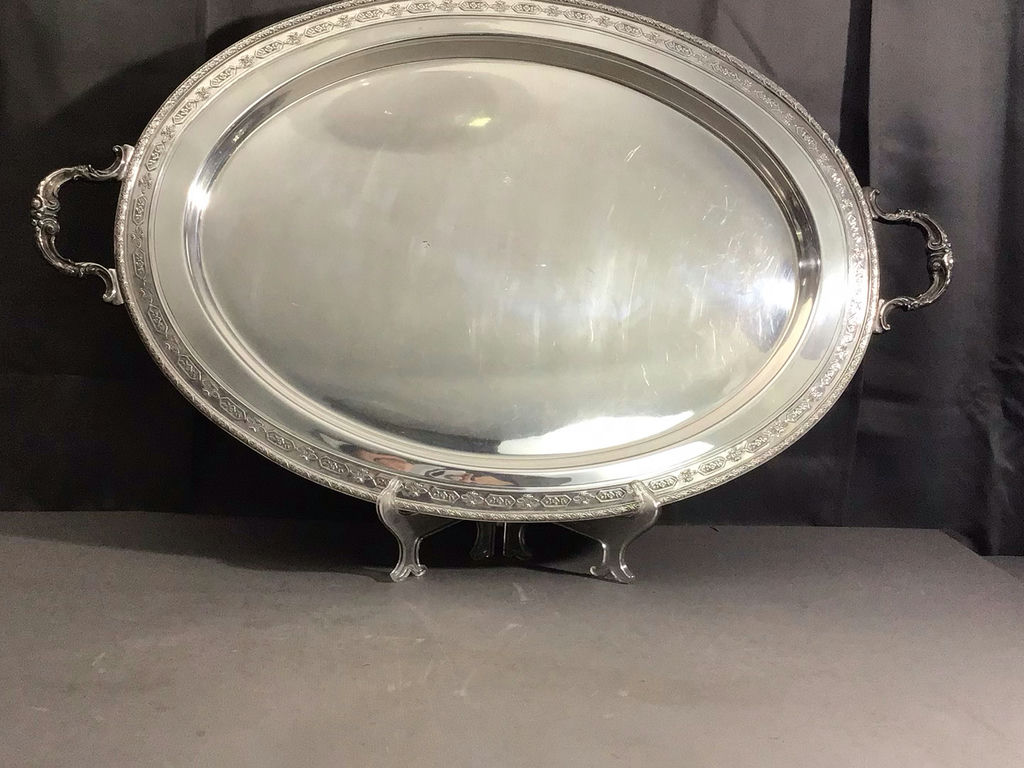
Lot 111: Towle sterling serving tray
Estimated melt value: US$6,221 (C$8,822)
Closing bid: US$4,560 (C$6,467)
Buyer total with 13% premium: US$5,153 (C$7,308)
Result: 83% of estimated melt value
Calculation note: 2,275 dwt sterling.
Lot 108: Towle sterling coffee & tea pots
Estimated melt value: US$2,739 (C$3,884)
Closing bid: US$1,950 (C$2,765)
Buyer total with 13% premium: US$2,204 (C$3,125)
Result: 80% of estimated melt value
Calculation note: 1,002 dwt sterling.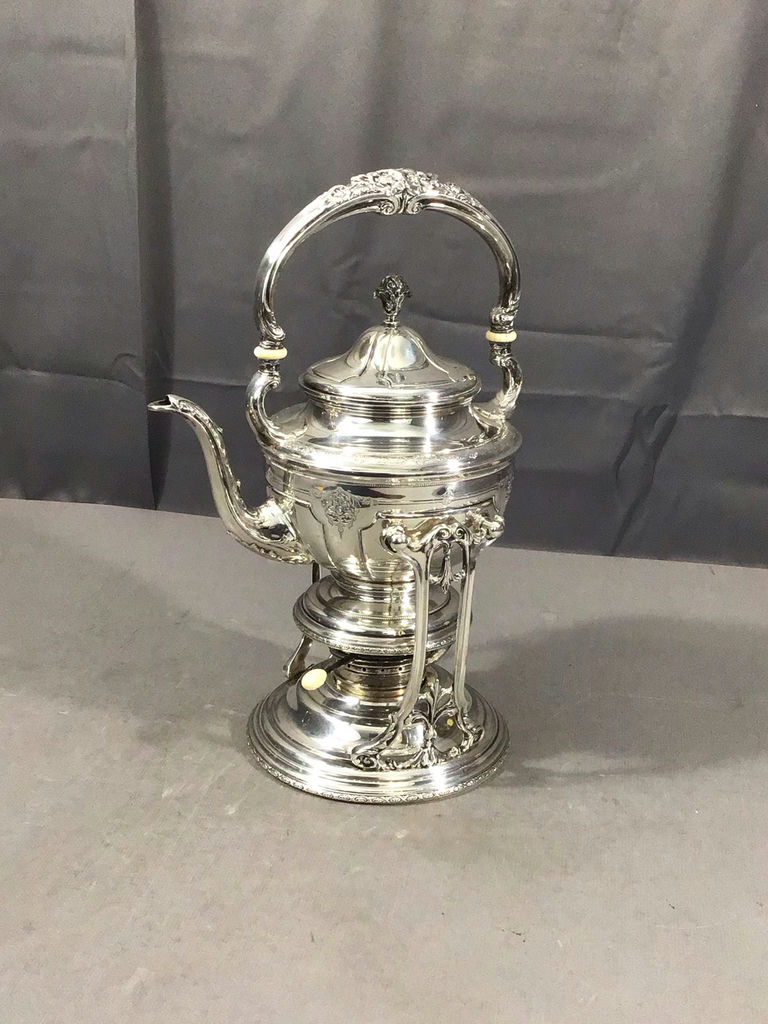
Lot 109: Towle sterling kettle & warmer
Estimated melt value: US$2,843 (C$4,032)
Closing bid: US$1,905 (C$2,702)
Buyer total with 13% premium: US$2,153 (C$3,053)
Result: 76% of estimated melt value
Calculation note: 1,040 dwt sterling.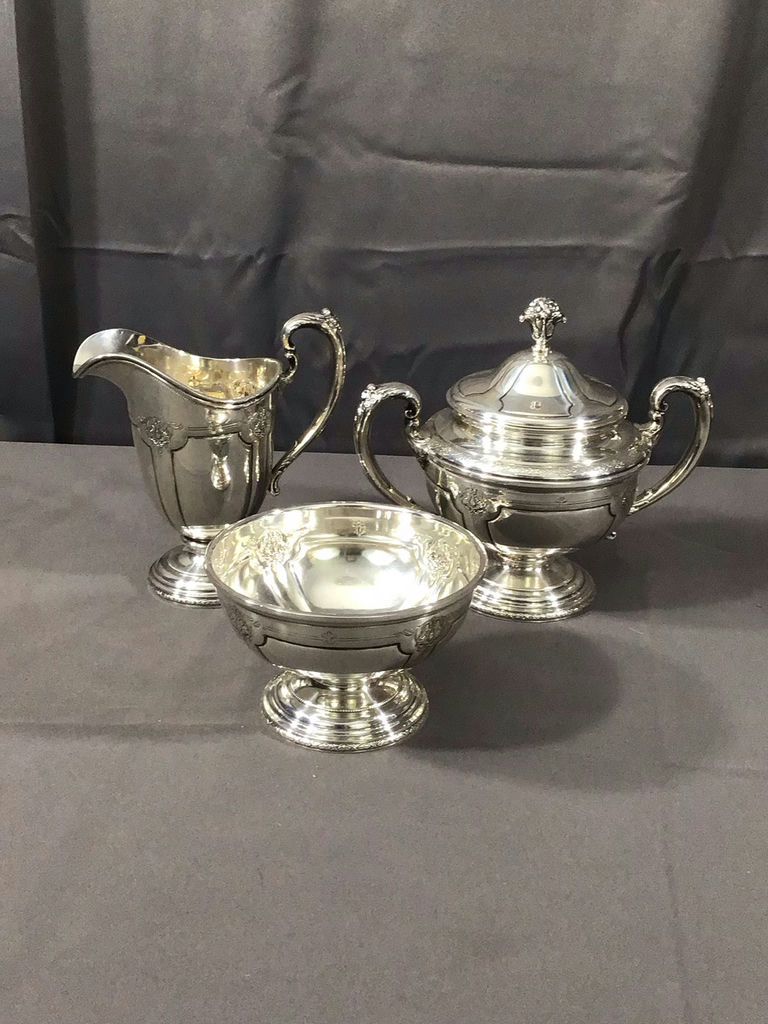
Lot 110: Towle sterling creamer, sugar & waste
Estimated melt value: US$1,642 (C$2,329)
Closing bid: US$1,162 (C$1,648)
Buyer total with 13% premium: US$1,313 (C$1,862)
Result: 80% of estimated melt value
Calculation note: 601 dwt sterling.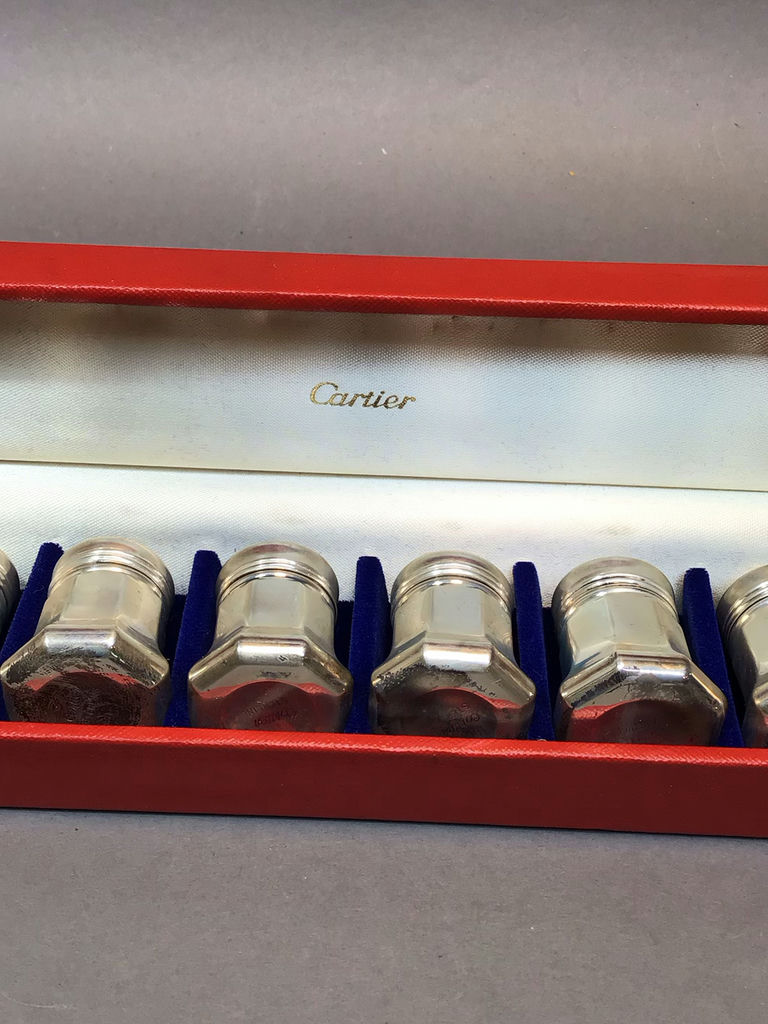
Lot 113: Vintage Cartier sterling shakers
Estimated melt value: US$107 (C$152)
Closing bid: US$157 (C$223)
Buyer total with 13% premium: US$177 (C$252)
Result: 166% of estimated melt value
Calculation note: 39 dwt sterling. Cartier provenance, craftsmanship and usability generated a premium.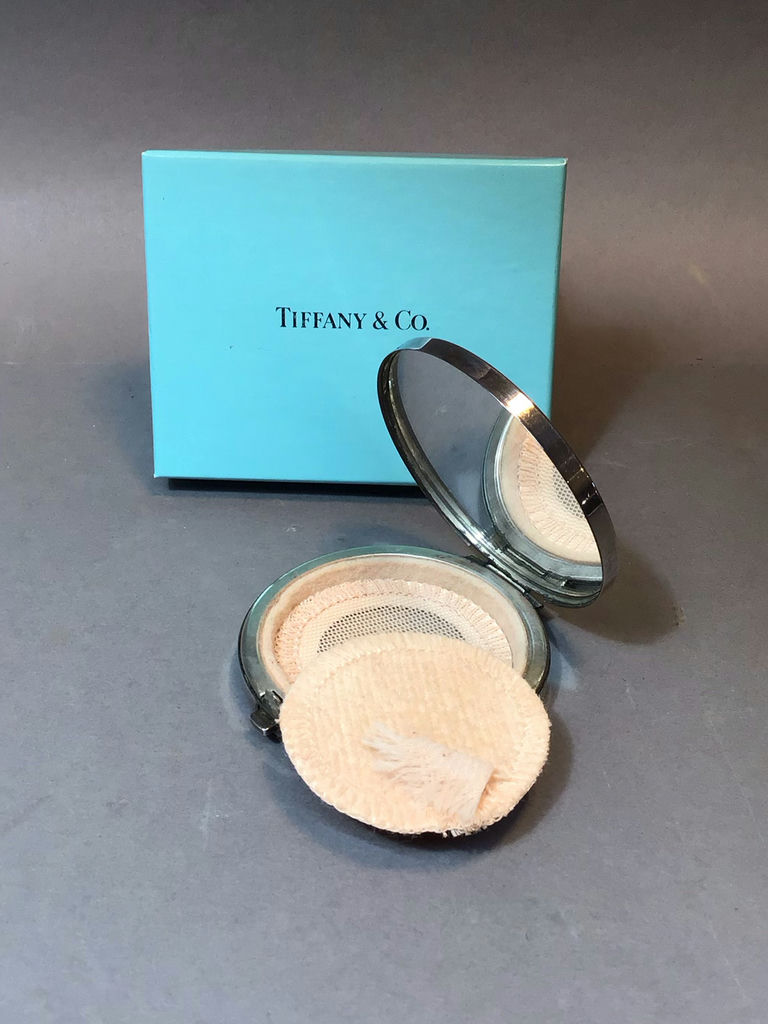
Lot 117: Antique Tiffany sterling compact
Estimated melt value: US$129 (C$182)
Closing bid: US$115 (C$163)
Buyer total with 13% premium: US$130 (C$184)
Result: 101% of estimated melt value
Calculation note: Conservative ceiling: 47 dwt gross includes the mirror and puff. Tiffany branding and collectibility created value beyond its silver content.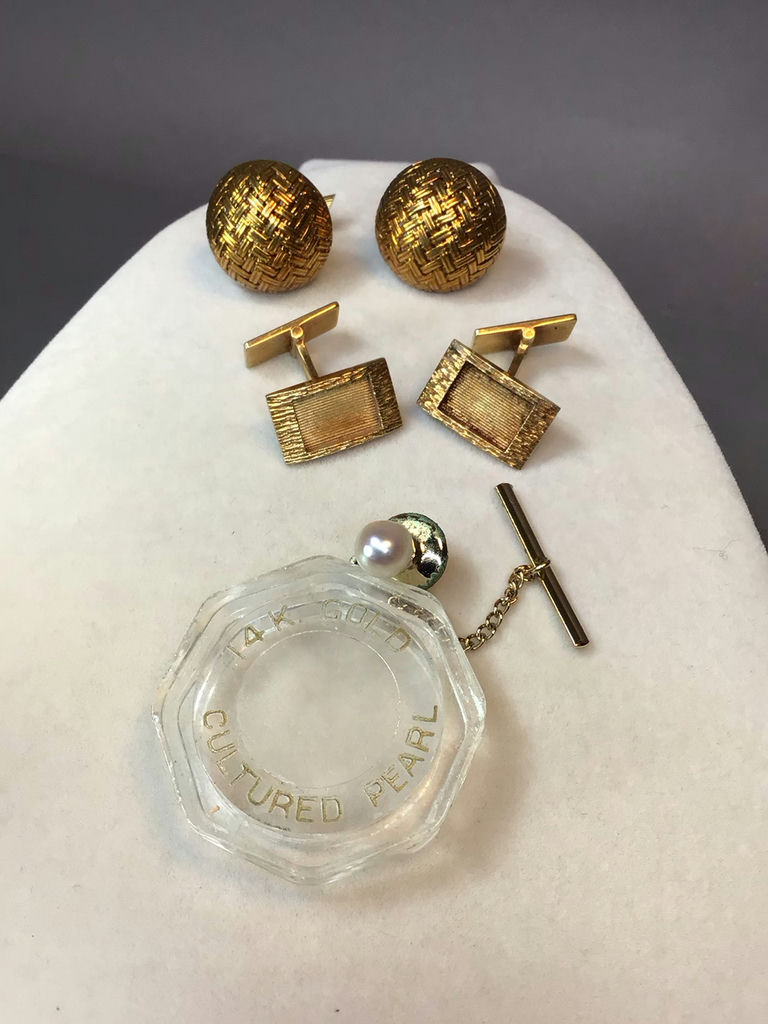
Lot 119: Vintage 14K & 18K cufflinks
Estimated melt value: US$2,548 (C$3,614)
Closing bid: US$1,850 (C$2,624)
Buyer total with 13% premium: US$2,091 (C$2,965)
Result: 82% of estimated melt value
Calculation note: 9 dwt 14K plus 10 dwt 18K.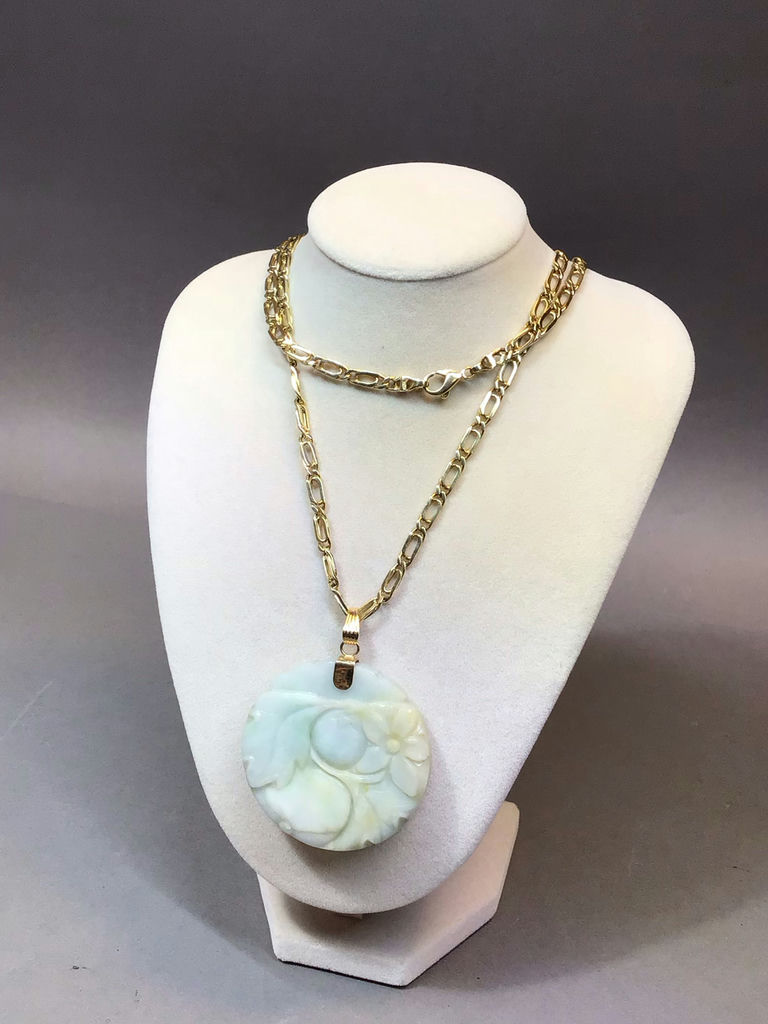
Lot 120: 14K gold & jade necklace
Estimated melt value: US$2,302 (C$3,265)
Closing bid: US$1,750 (C$2,482)
Buyer total with 13% premium: US$1,978 (C$2,804)
Result: 86% of estimated melt value
Calculation note: Conservative ceiling: 19 dwt gross includes jade.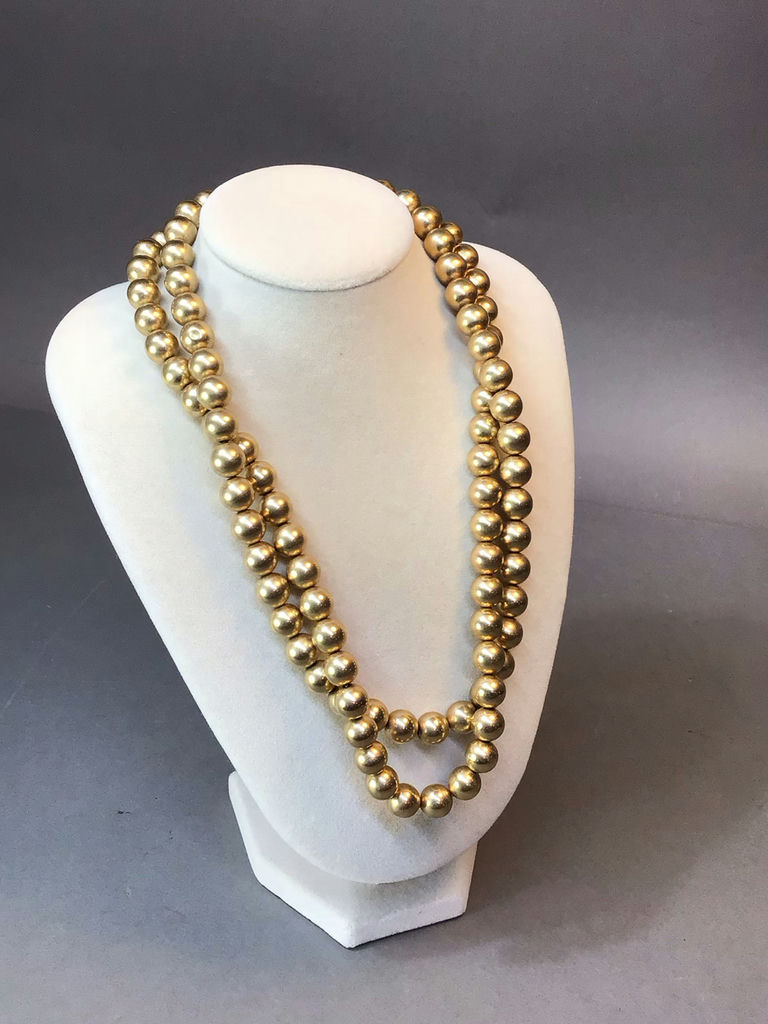
Lot 121: 14K double-strand bead necklace
Estimated melt value: US$5,892 (C$8,356)
Closing bid: US$4,520 (C$6,410)
Buyer total with 13% premium: US$5,108 (C$7,244)
Result: 87% of estimated melt value
Calculation note: 49 dwt 14K.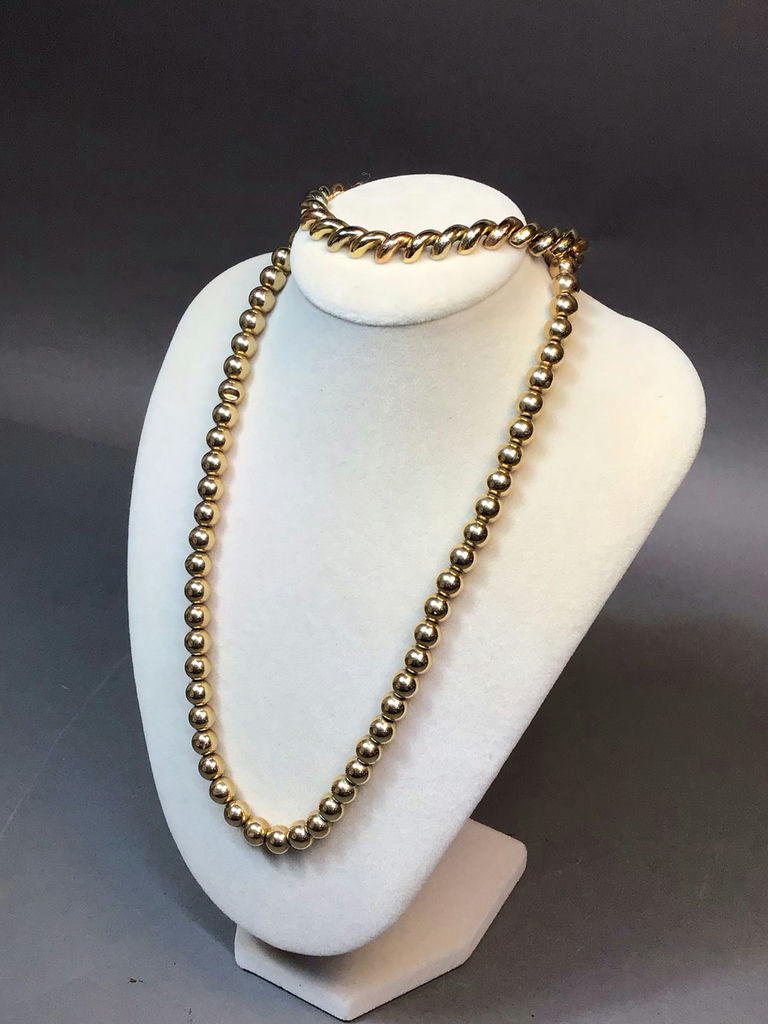
Lot 122: 14K yellow gold jewelry
Estimated melt value: US$2,684 (C$3,806)
Closing bid: US$2,111 (C$2,994)
Buyer total with 13% premium: US$2,385 (C$3,383)
Result: 89% of estimated melt value
Calculation note: 23 dwt 14K.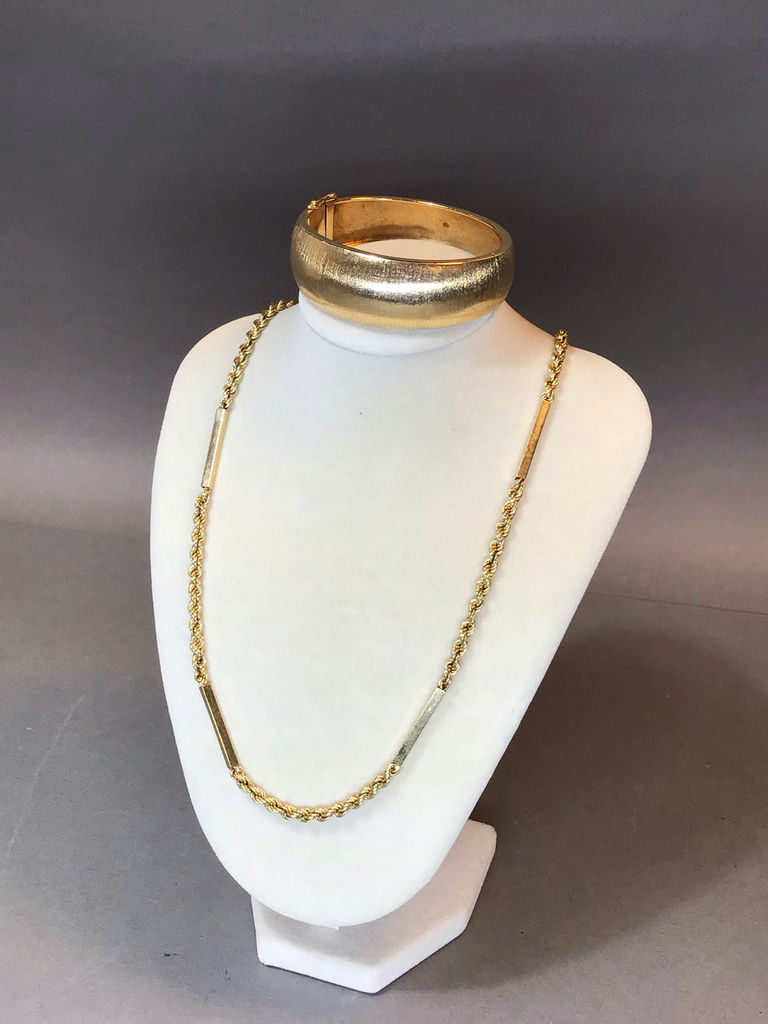
Lot 123: 14K yellow gold jewelry
Estimated melt value: US$3,554 (C$5,041)
Closing bid: US$2,650 (C$3,758)
Buyer total with 13% premium: US$2,995 (C$4,247)
Result: 84% of estimated melt value
Calculation note: 30 dwt 14K.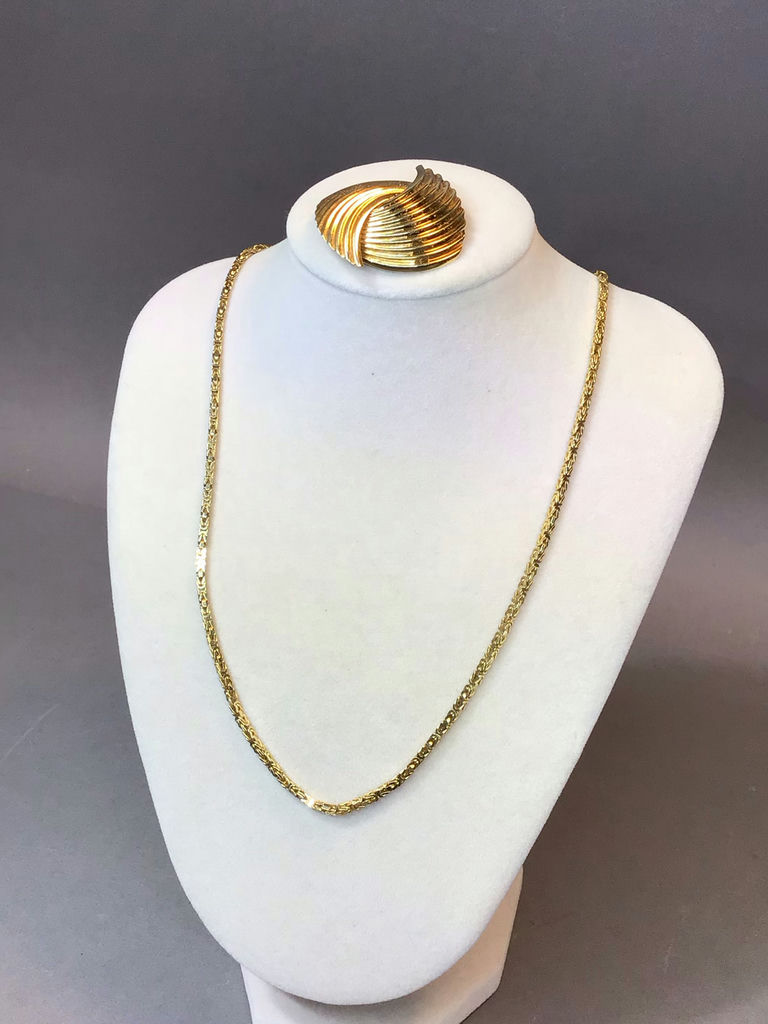
Lot 124: 14K yellow gold jewelry
Estimated melt value: US$1,884 (C$2,673)
Closing bid: US$1,475 (C$2,092)
Buyer total with 13% premium: US$1,667 (C$2,364)
Result: 88% of estimated melt value
Calculation note: 16 dwt 14K.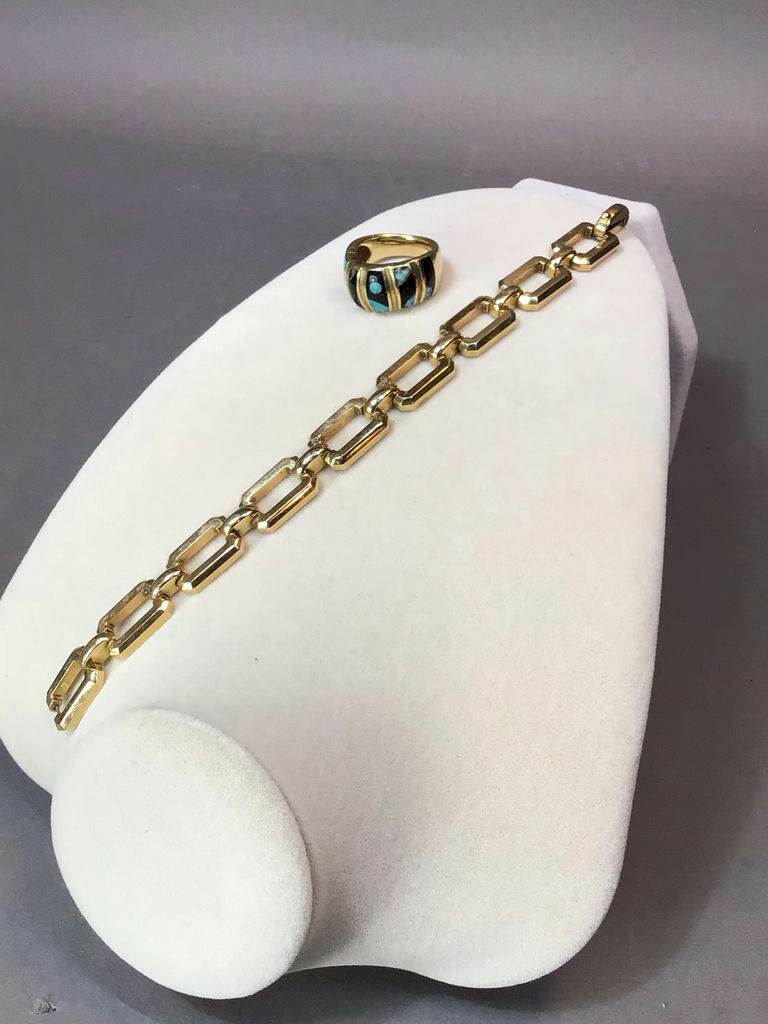
Lot 125: 14K bracelet & stone-set ring
Estimated melt value: US$2,218 (C$3,146)
Closing bid: US$1,600 (C$2,269)
Buyer total with 13% premium: US$1,808 (C$2,564)
Result: 81% of estimated melt value
Calculation note: Conservative ceiling: 19 dwt gross includes stones.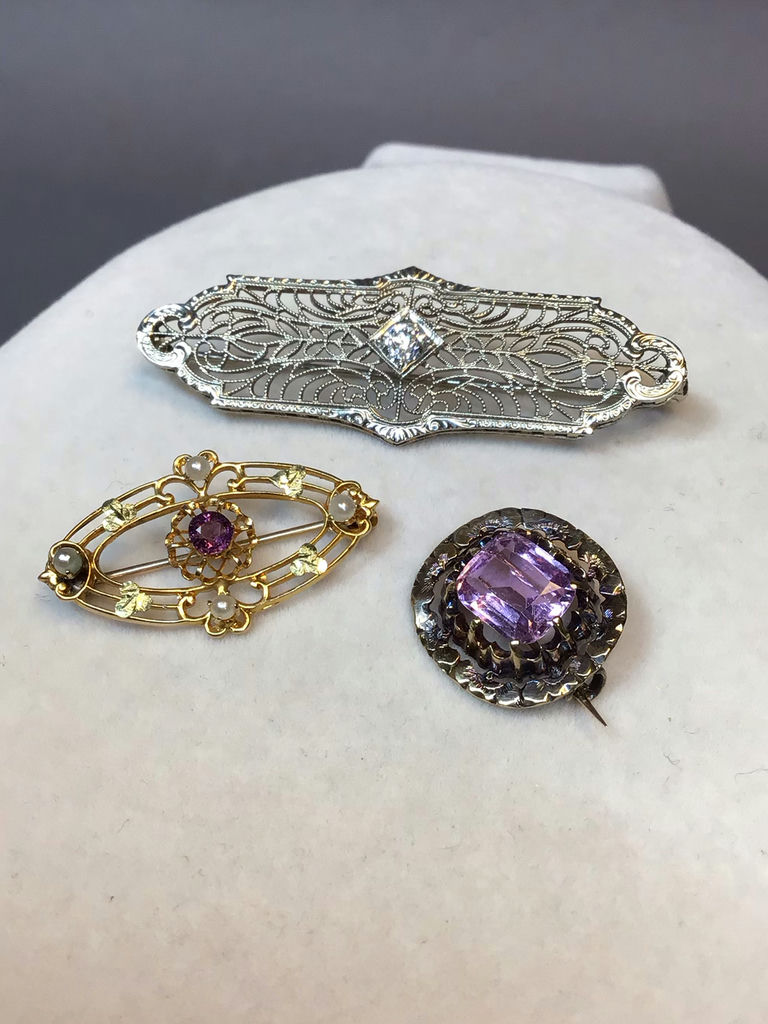
Lot 126: Antique 14K brooches
Estimated melt value: US$525 (C$744)
Closing bid: US$305 (C$433)
Buyer total with 13% premium: US$345 (C$489)
Result: 66% of estimated melt value
Calculation note: Conservative ceiling: 4 dwt gross includes stones and pearls.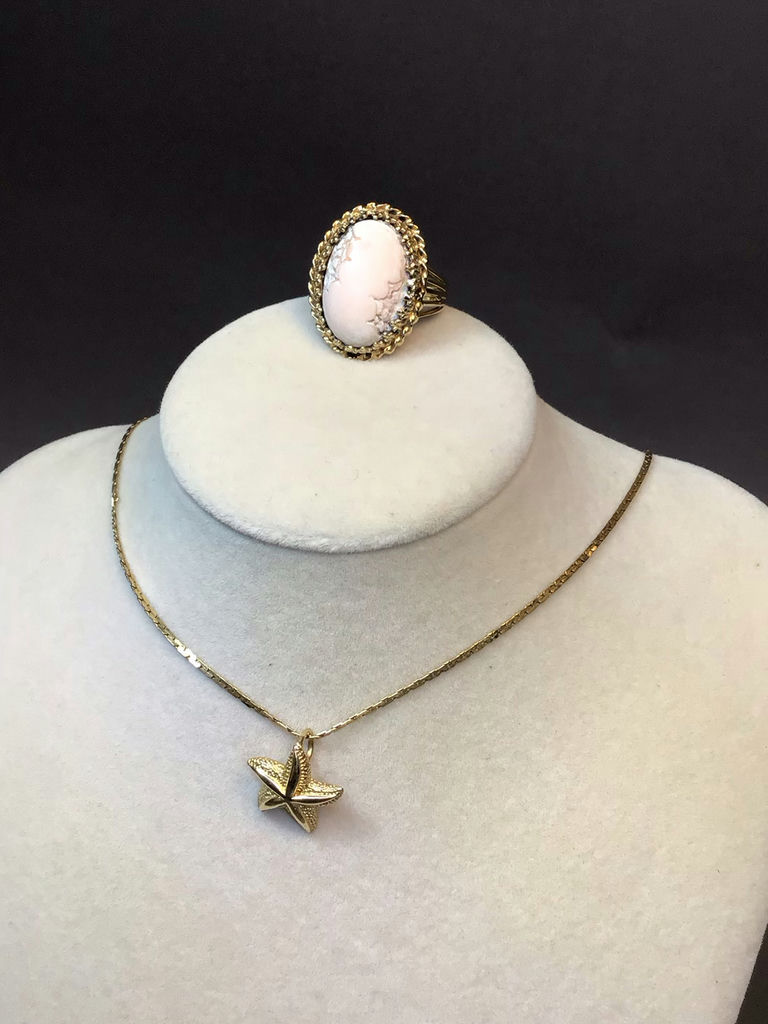
Lot 127: 14K & 18K jewelry
Estimated melt value: US$1,182 (C$1,676)
Closing bid: US$621 (C$881)
Buyer total with 13% premium: US$702 (C$995)
Result: 59% of estimated melt value
Calculation note: Conservative ceiling: 4 dwt 14K plus 5 dwt 18K ring including shell.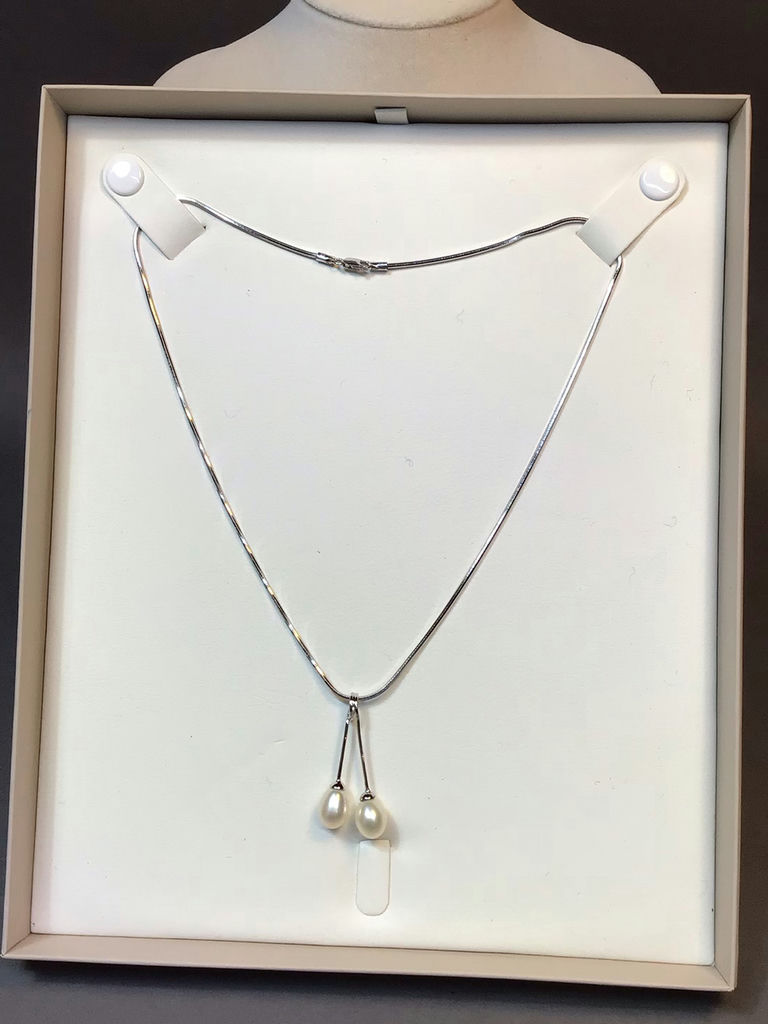
Lot 128: 14K white gold & pearl necklace
Estimated melt value: US$465 (C$660)
Closing bid: US$395 (C$560)
Buyer total with 13% premium: US$446 (C$633)
Result: 96% of estimated melt value
Calculation note: 4 dwt chain only; pendant and pearls excluded.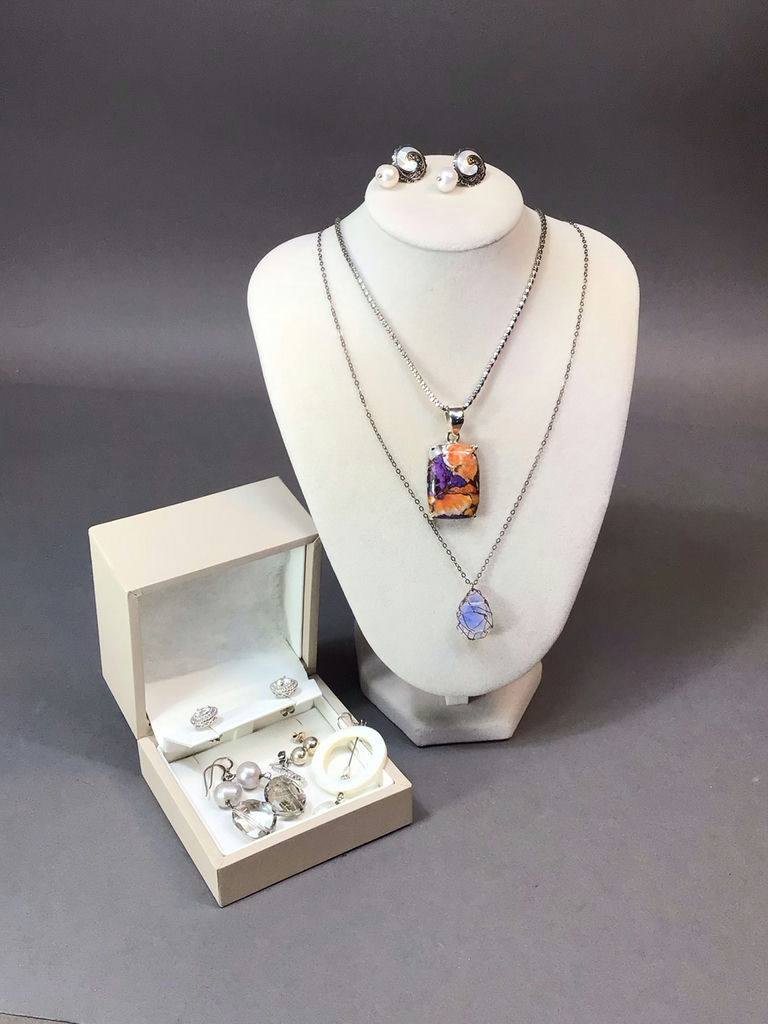
Lot 129: Sterling jewelry
Estimated melt value: US$22 (C$32)
Closing bid: US$43 (C$61)
Buyer total with 13% premium: US$49 (C$69)
Result: 217% of estimated melt value
Calculation note: Conservative ceiling: 8 dwt gross includes stones and pearls. Wearability, design, stones and pearls can be worth more than approximately $22 of silver.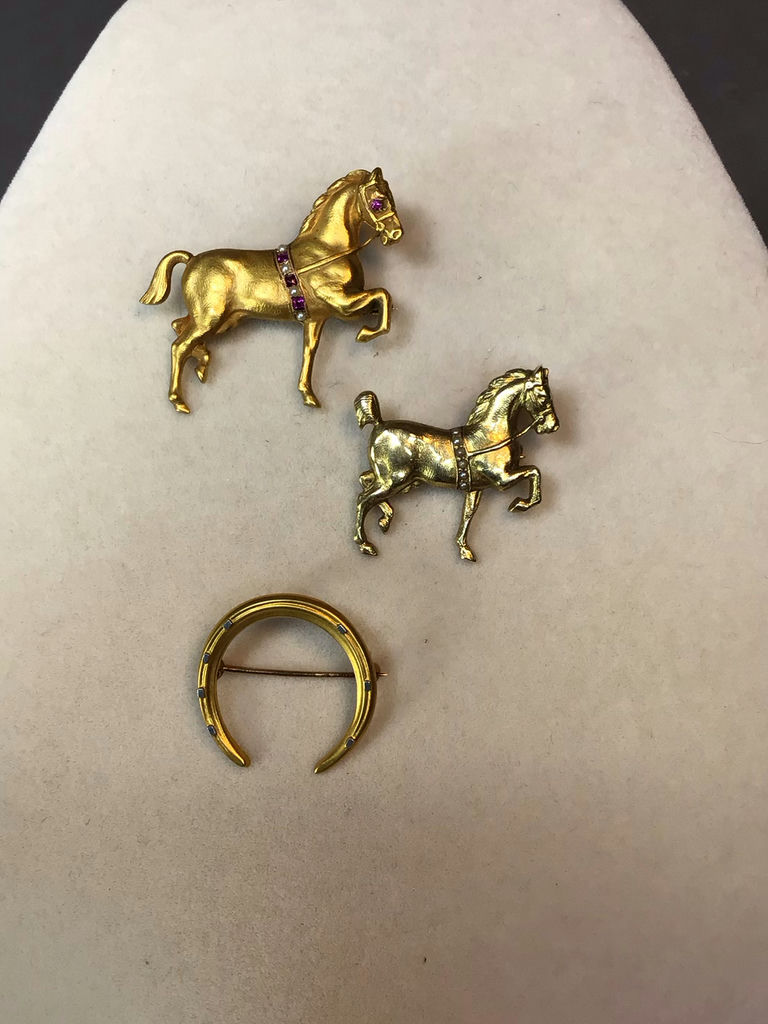
Lot 130: Antique 14K horse pins
Estimated melt value: US$632 (C$897)
Closing bid: US$477 (C$676)
Buyer total with 13% premium: US$539 (C$764)
Result: 85% of estimated melt value
Calculation note: Conservative ceiling: 5 dwt includes tiny stones and pearls.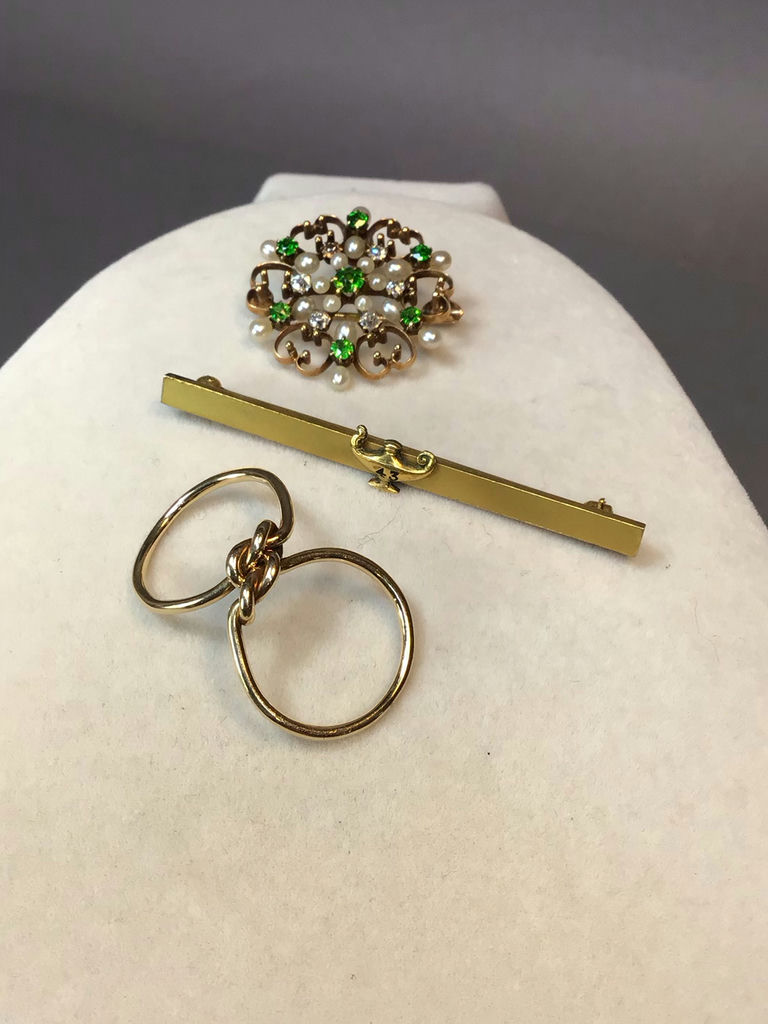
Lot 131: Vintage 14K & gold-plate jewelry
Estimated melt value: US$477 (C$677)
Closing bid: US$409 (C$580)
Buyer total with 13% premium: US$462 (C$655)
Result: 97% of estimated melt value
Calculation note: Approximately 4 dwt 14K from the catalog title; gold plate excluded.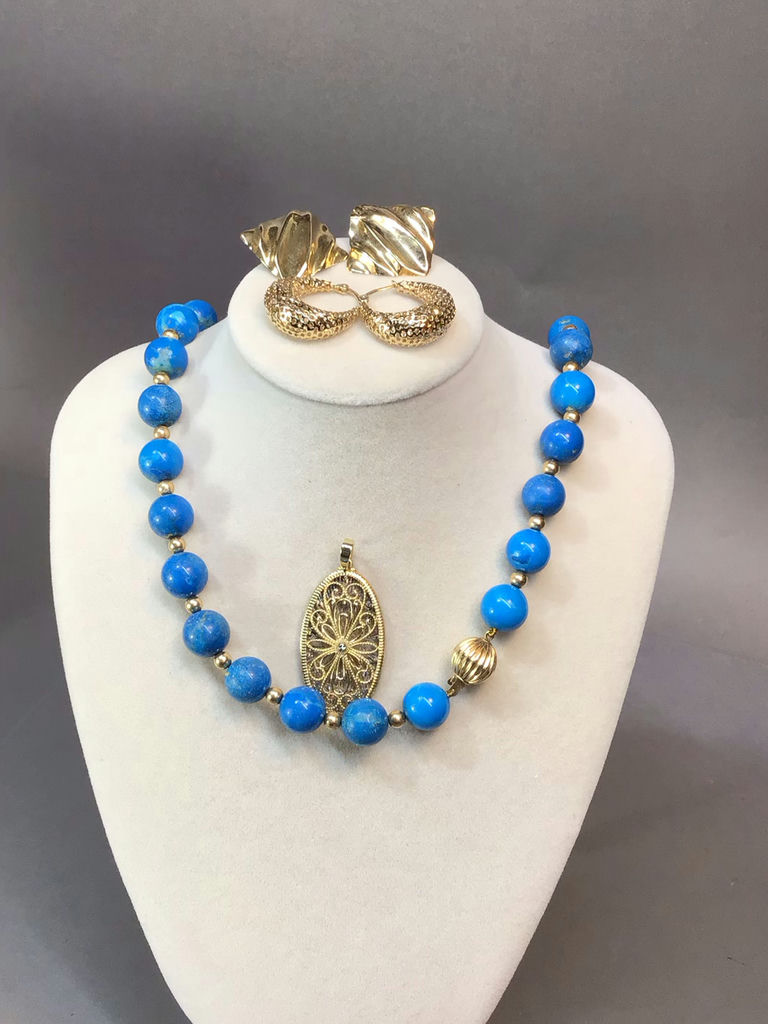
Lot 133: 14K & stone jewelry
Estimated melt value: US$668 (C$947)
Closing bid: US$585 (C$830)
Buyer total with 13% premium: US$661 (C$938)
Result: 99% of estimated melt value
Calculation note: Conservative ceiling: 6 dwt gross includes backing and stones.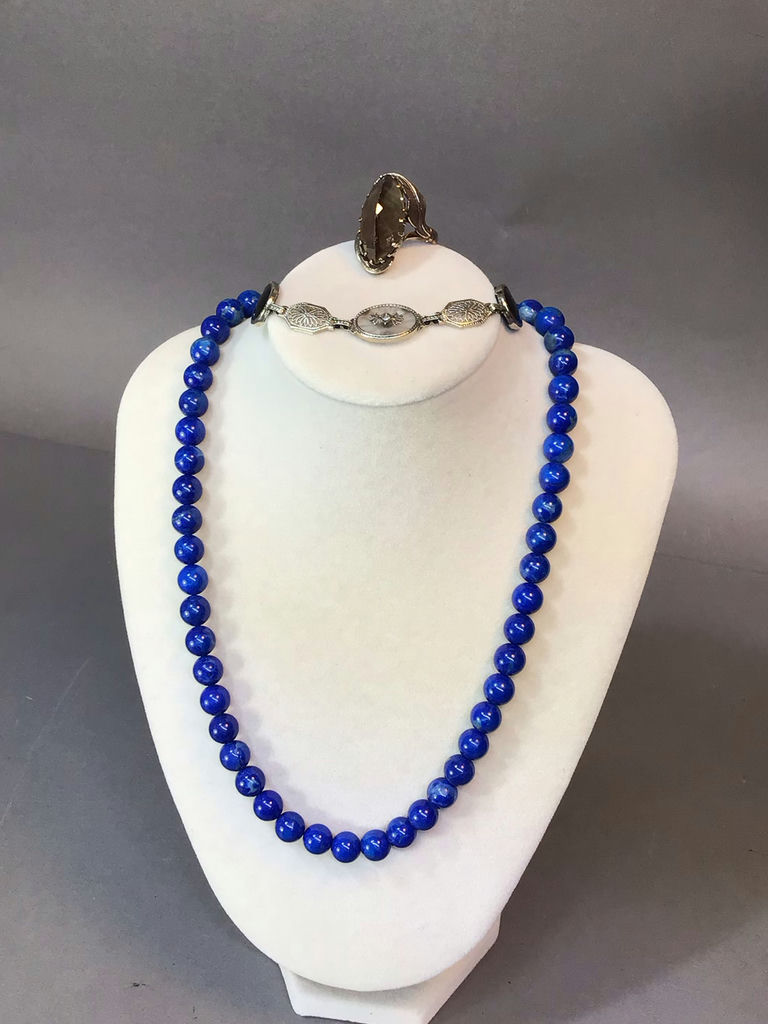
Lot 134: 14K gold & sterling jewelry
Estimated melt value: US$596 (C$846)
Closing bid: US$494 (C$701)
Buyer total with 13% premium: US$558 (C$792)
Result: 94% of estimated melt value
Calculation note: Approximately 5 dwt 14K from the catalog title; stones and sterling clasp excluded.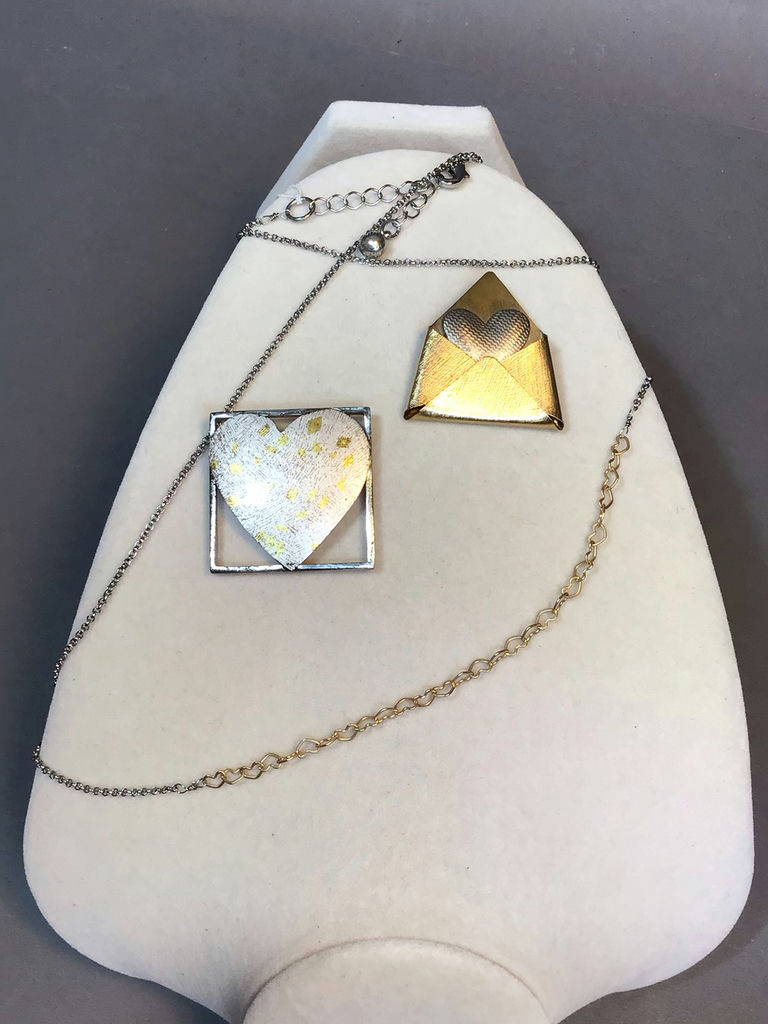
Lot 135: Pat Flynn sterling/18K brooch & more
Estimated melt value: US$13 (C$18)
Closing bid: US$235 (C$333)
Buyer total with 13% premium: US$266 (C$377)
Result: 2,067% of estimated melt value
Calculation note: The $13 estimate included only the identifiable sterling. It excluded the fused 18K and other pieces, so this is an incomplete metal-value floor—not a true comparison.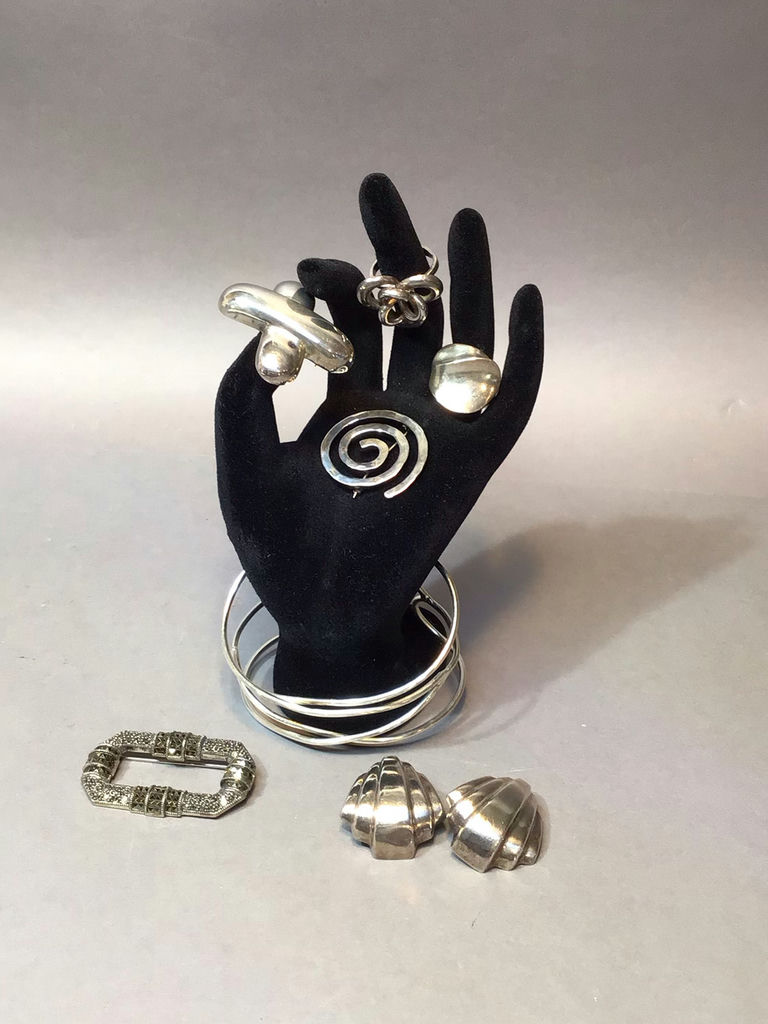
Lot 136: “Fun Shapes” sterling jewelry
Estimated melt value: US$119 (C$169)
Closing bid: US$80 (C$113)
Buyer total with 13% premium: US$90 (C$128)
Result: 76% of estimated melt value
Calculation note: Conservative ceiling: 44 dwt gross includes marcasite and an unmarked bracelet.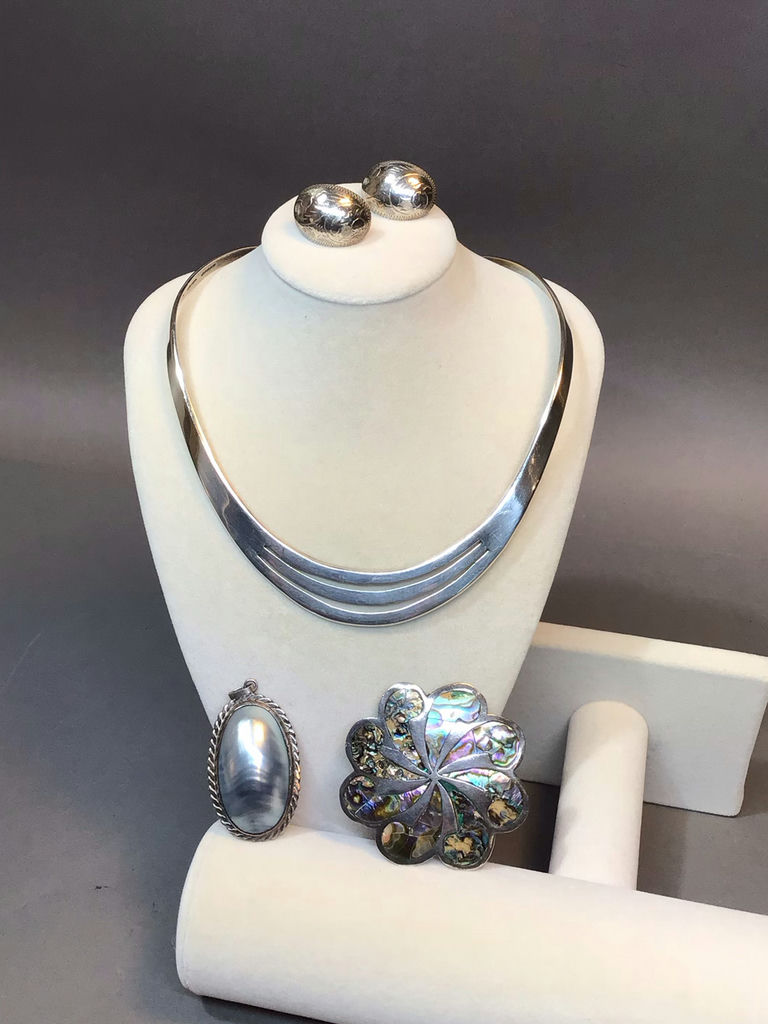
Lot 137: Sterling & shell jewelry
Estimated melt value: US$86 (C$122)
Closing bid: US$150 (C$213)
Buyer total with 13% premium: US$170 (C$240)
Result: 197% of estimated melt value
Calculation note: 31 dwt of known sterling collar and earrings; shell pieces excluded. The calculation excluded the shell pieces; bidders valued the complete jewelry.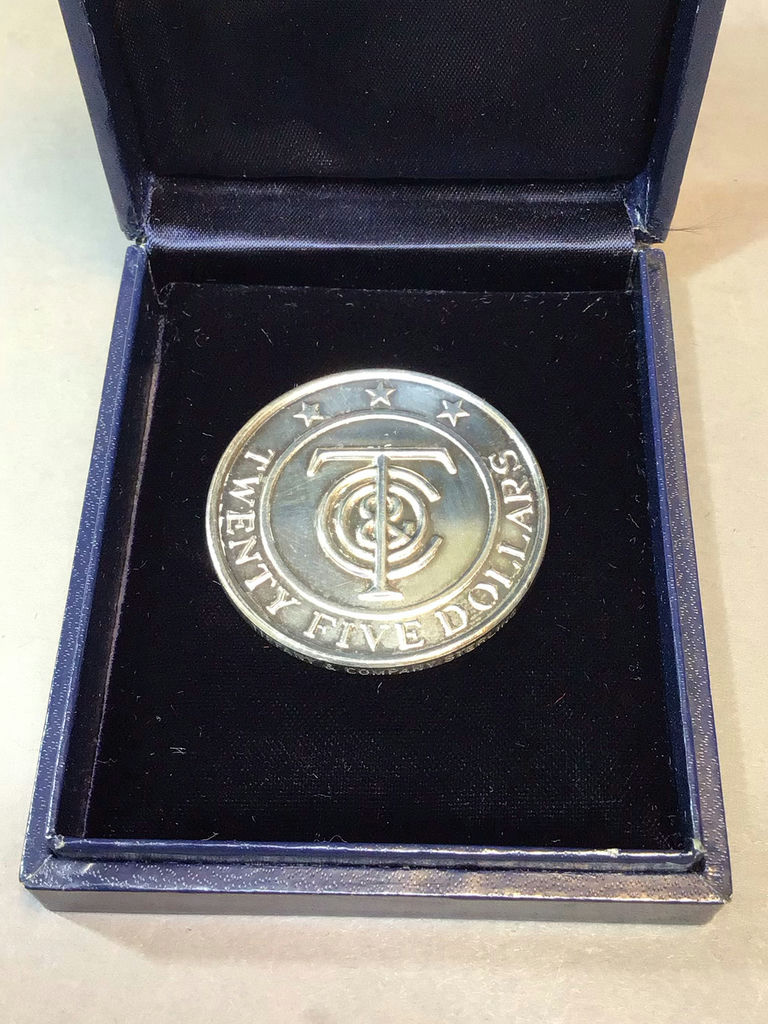
Lot 138: Tiffany Money sterling coin
Estimated melt value: US$48 (C$68)
Closing bid: US$80 (C$113)
Buyer total with 13% premium: US$90 (C$128)
Result: 189% of estimated melt value
Calculation note: 18 dwt sterling. Tiffany branding and collectibility created value beyond its silver content.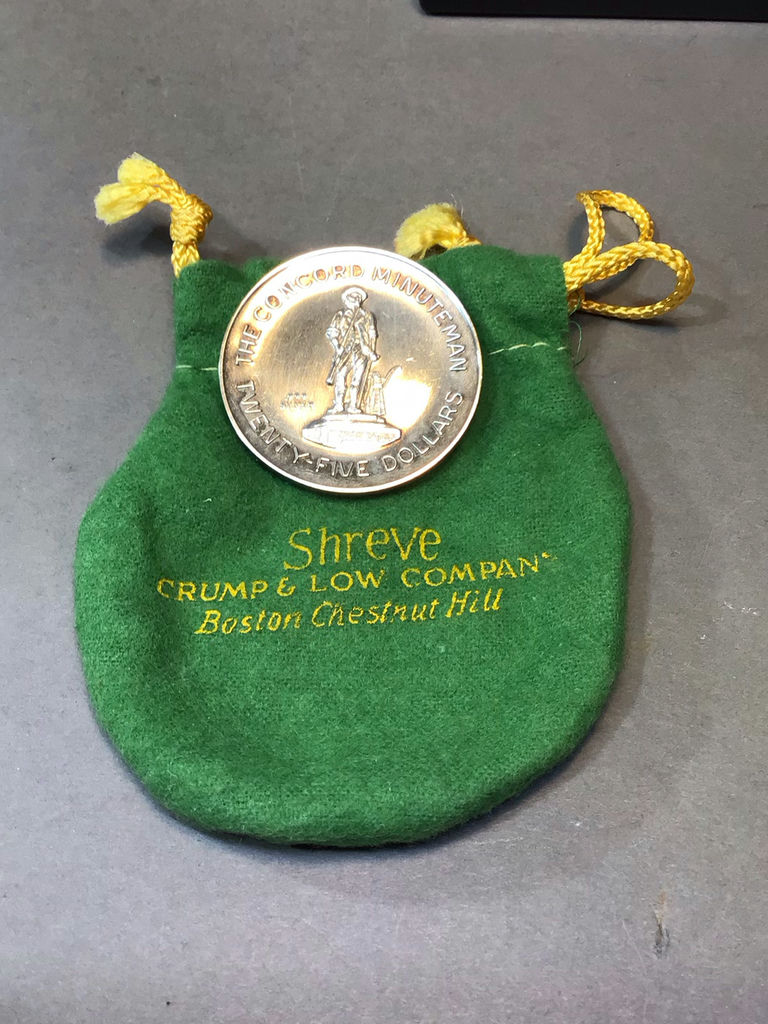
Lot 139: Shreve, Crump & Low .999 silver coin
Estimated melt value: US$59 (C$84)
Closing bid: US$90 (C$128)
Buyer total with 13% premium: US$102 (C$144)
Result: 171% of estimated melt value
Calculation note: 20 dwt .999 silver. A branded collectible object, not generic bullion.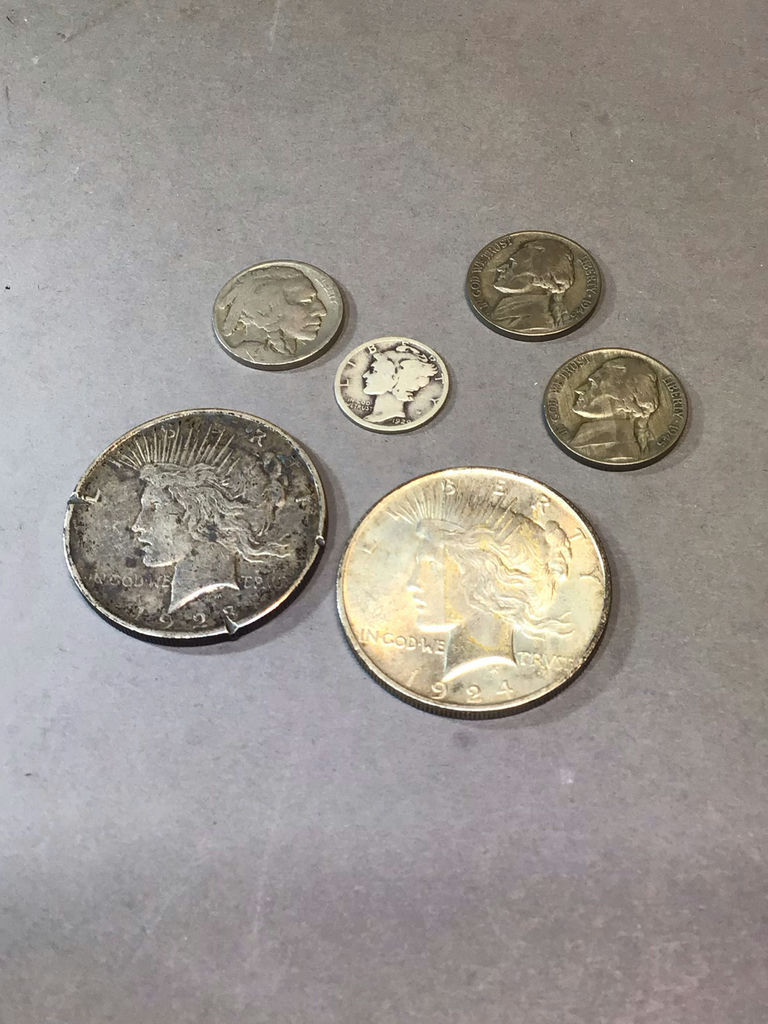
Lot 140: U.S. silver coins
Estimated melt value: US$103 (C$146)
Closing bid: US$95 (C$135)
Buyer total with 13% premium: US$107 (C$152)
Result: 105% of estimated melt value
Calculation note: Cataloged mix of 90% and 35% silver.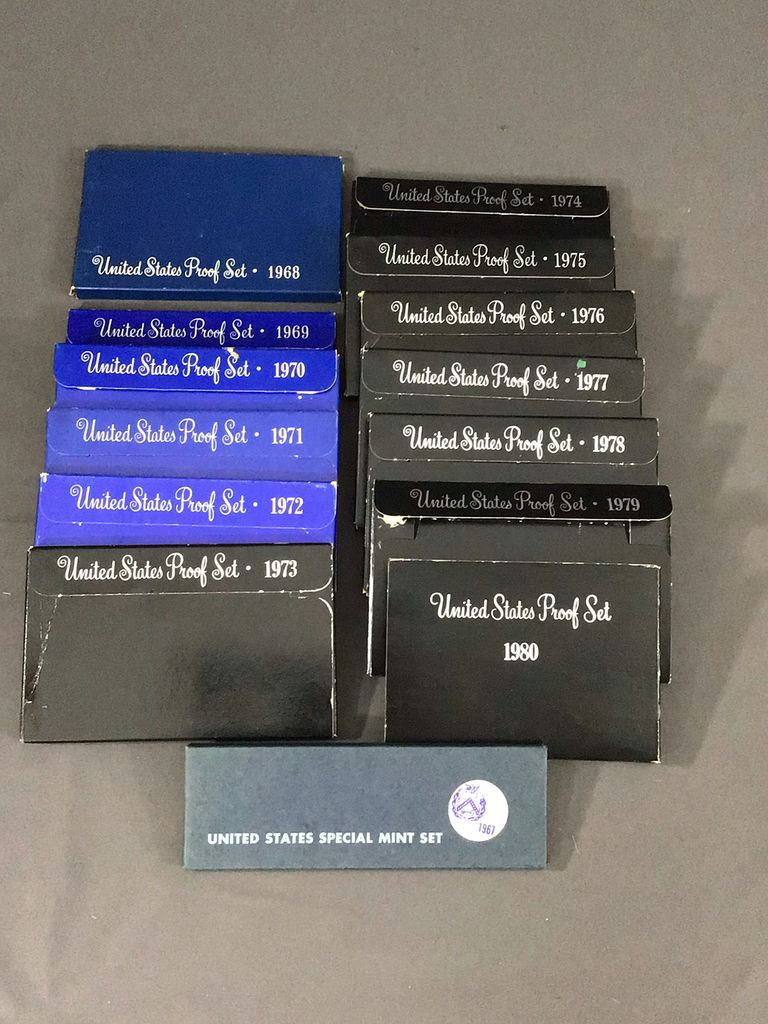
Lot 141: 1967 SMS & 1968–1980 U.S. proof sets
Estimated melt value: US$35 (C$50)
Closing bid: US$80 (C$113)
Buyer total with 13% premium: US$90 (C$128)
Result: 259% of estimated melt value
Calculation note: Four 40% silver half dollars; remaining coins treated as clad. Collector sets have numismatic and presentation value. The melt estimate counted only four silver half dollars.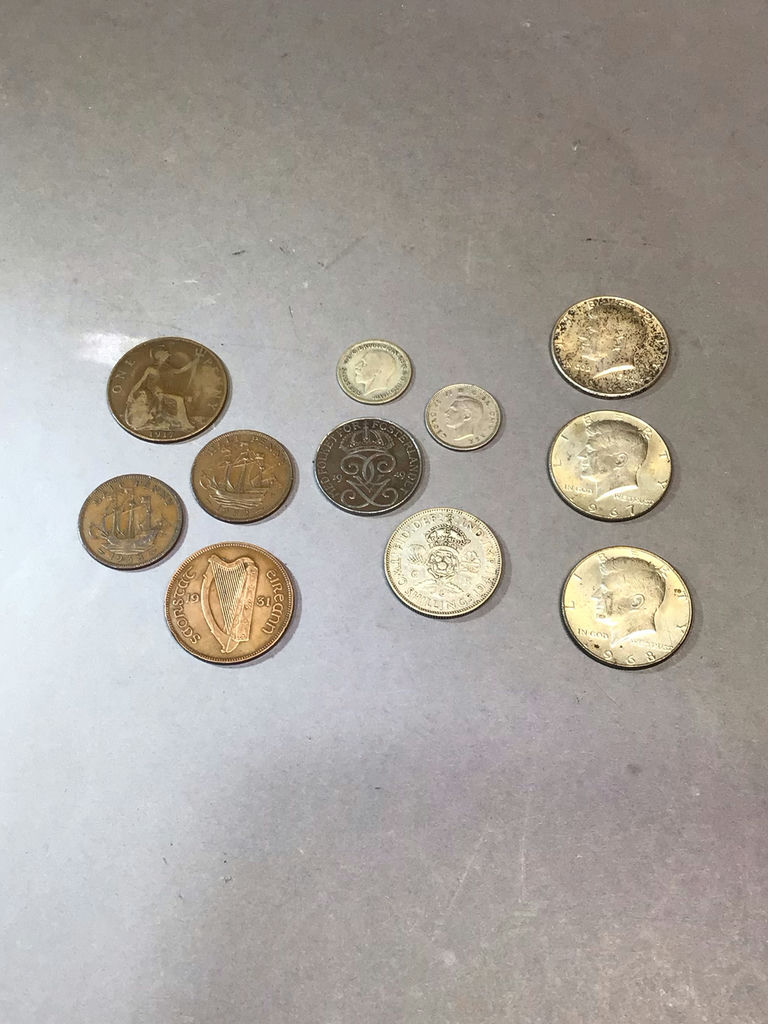
Lot 142: U.S. & foreign collector coins
Estimated melt value: US$52 (C$74)
Closing bid: US$33 (C$47)
Buyer total with 13% premium: US$37 (C$53)
Result: 71% of estimated melt value
Calculation note: Cataloged mix of 50%, 90% and 40% silver.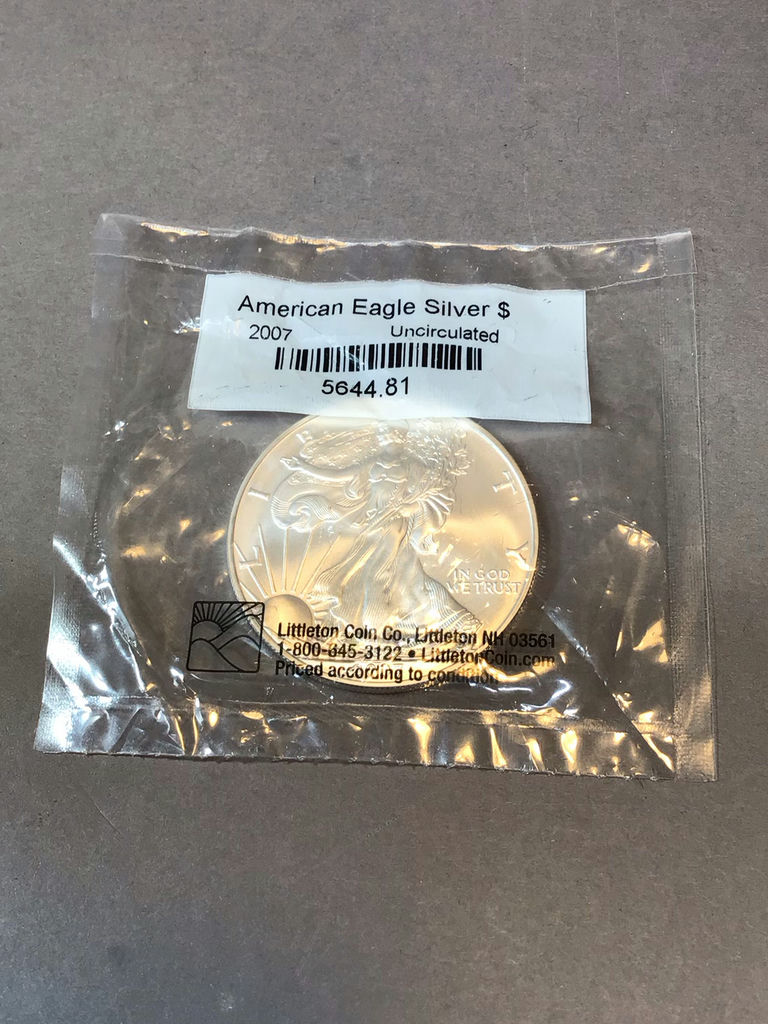
Lot 143: 2007 American Silver Eagle
Estimated melt value: US$59 (C$84)
Closing bid: US$71 (C$101)
Buyer total with 13% premium: US$80 (C$114)
Result: 136% of estimated melt value
Calculation note: One fine troy ounce of silver. Recognizable government bullion coins commonly carry collector and retail premiums over raw silver.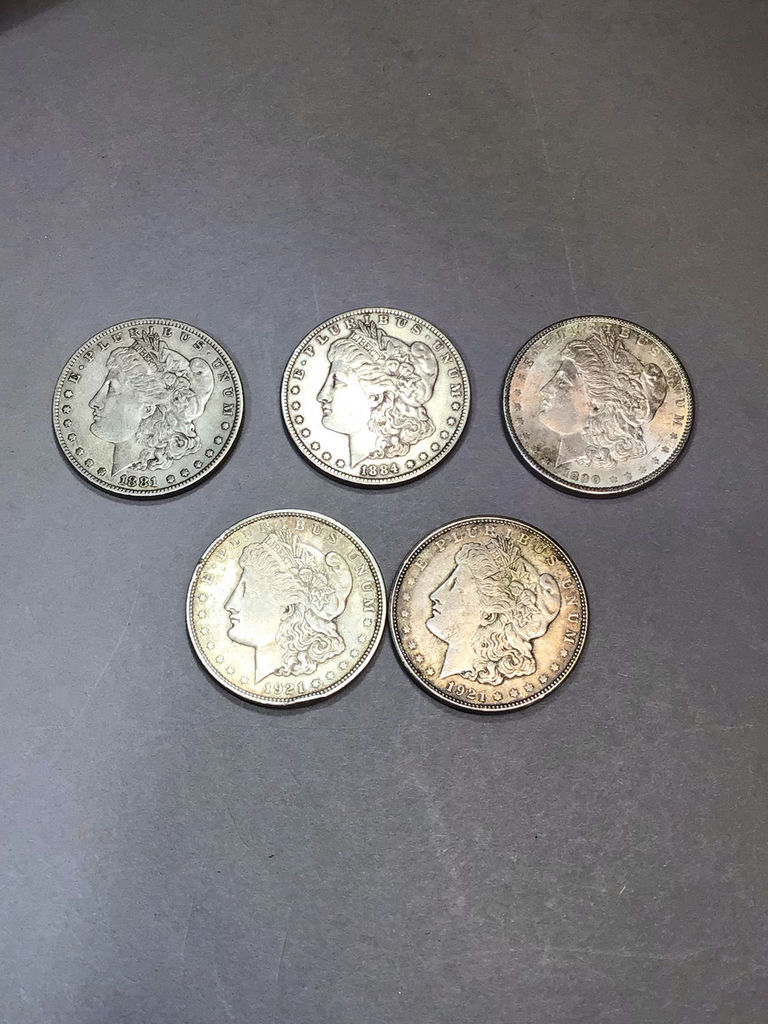
Lot 144: U.S. Morgan silver dollars
Estimated melt value: US$228 (C$323)
Closing bid: US$200 (C$284)
Buyer total with 13% premium: US$226 (C$321)
Result: 99% of estimated melt value
Calculation note: 86 dwt at 90% silver.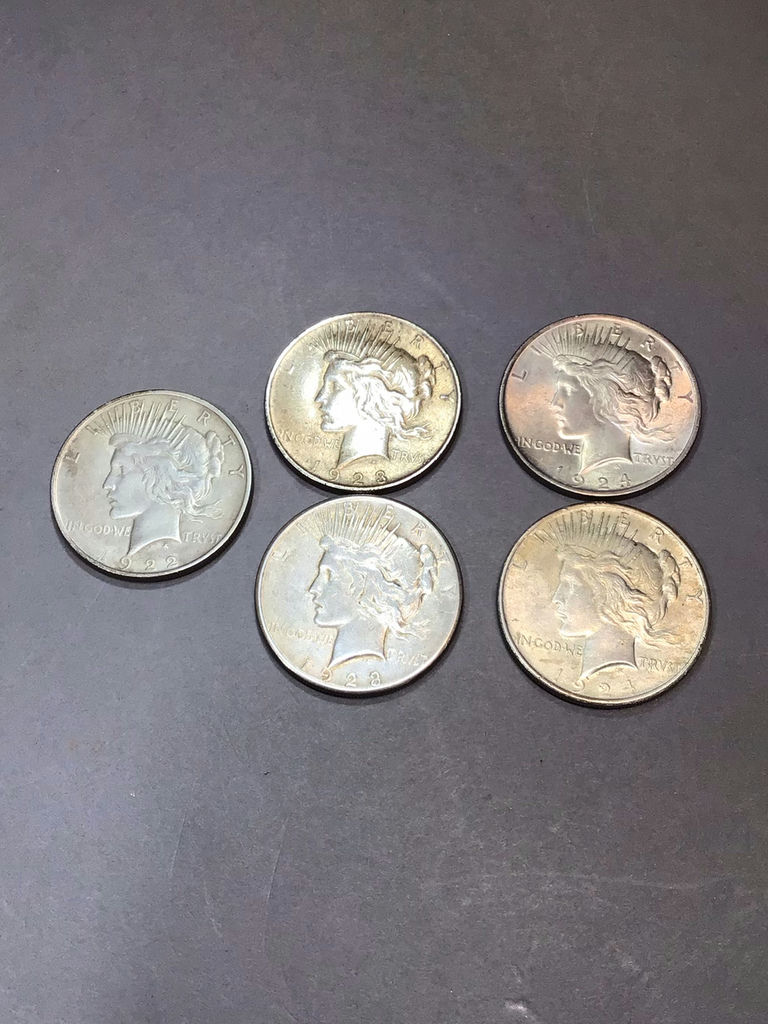
Lot 145: U.S. Peace silver dollars
Estimated melt value: US$229 (C$324)
Closing bid: US$180 (C$255)
Buyer total with 13% premium: US$203 (C$288)
Result: 89% of estimated melt value
Calculation note: 86 dwt at 90% silver.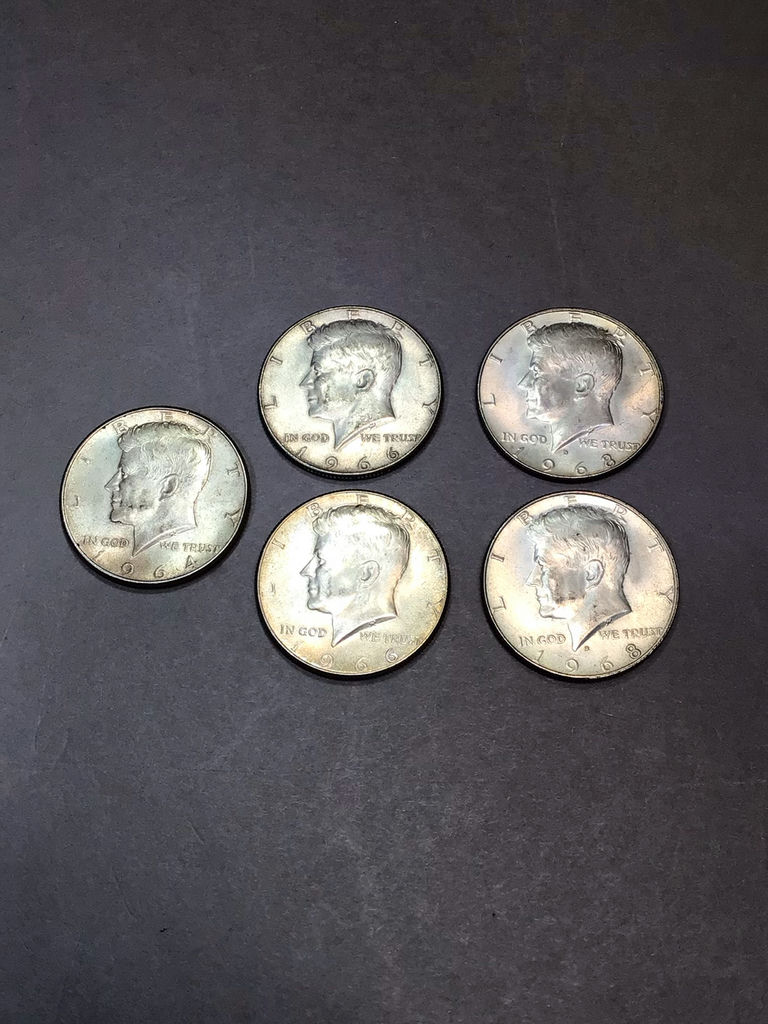
Lot 146: U.S. JFK silver half dollars
Estimated melt value: US$56 (C$80)
Closing bid: US$36 (C$51)
Buyer total with 13% premium: US$41 (C$58)
Result: 72% of estimated melt value
Calculation note: 8 dwt at 90% plus 29 dwt at 40% silver.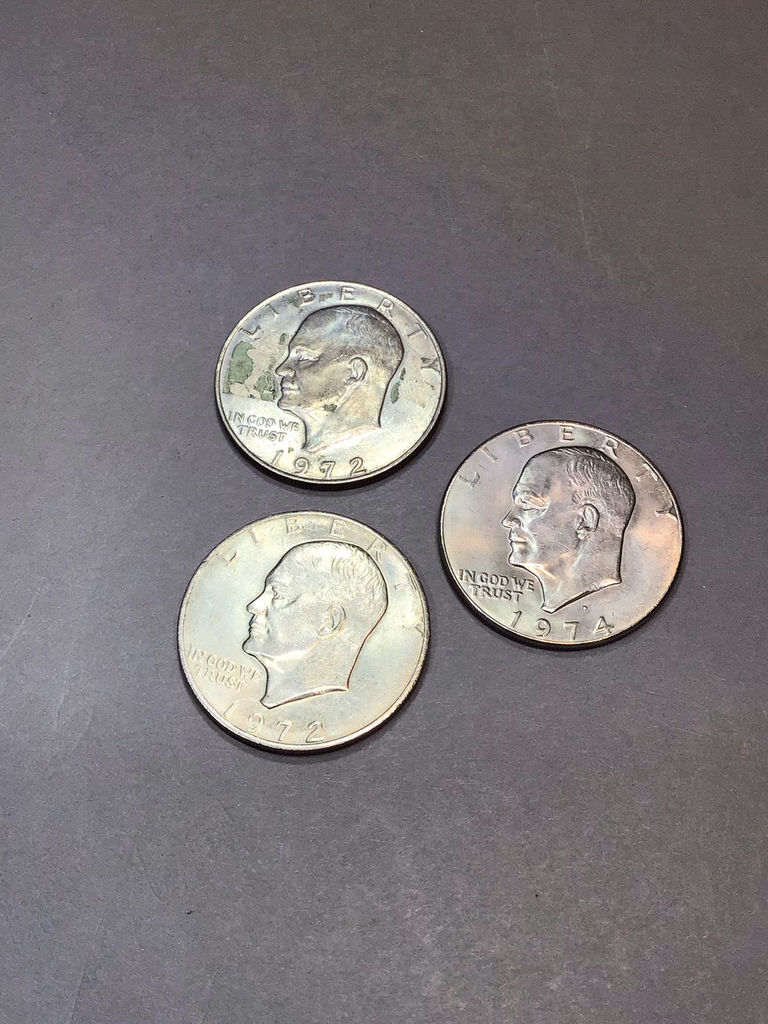
Lot 147: U.S. Eisenhower silver dollars
Estimated melt value: US$52 (C$73)
Closing bid: US$17 (C$24)
Buyer total with 13% premium: US$19 (C$27)
Result: 37% of estimated melt value
Calculation note: 44 dwt at 40% silver.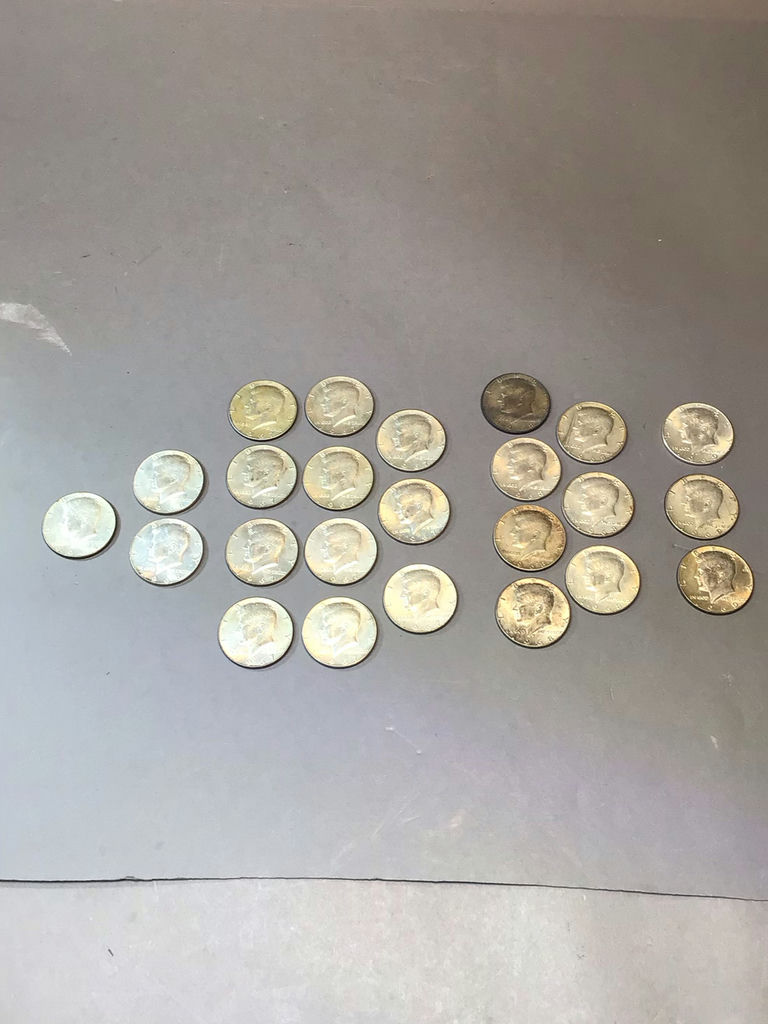
Lot 148: U.S. JFK half dollars, 1965–1969
Estimated melt value: US$209 (C$297)
Closing bid: US$140 (C$199)
Buyer total with 13% premium: US$158 (C$224)
Result: 76% of estimated melt value
Calculation note: 177 dwt at 40% silver.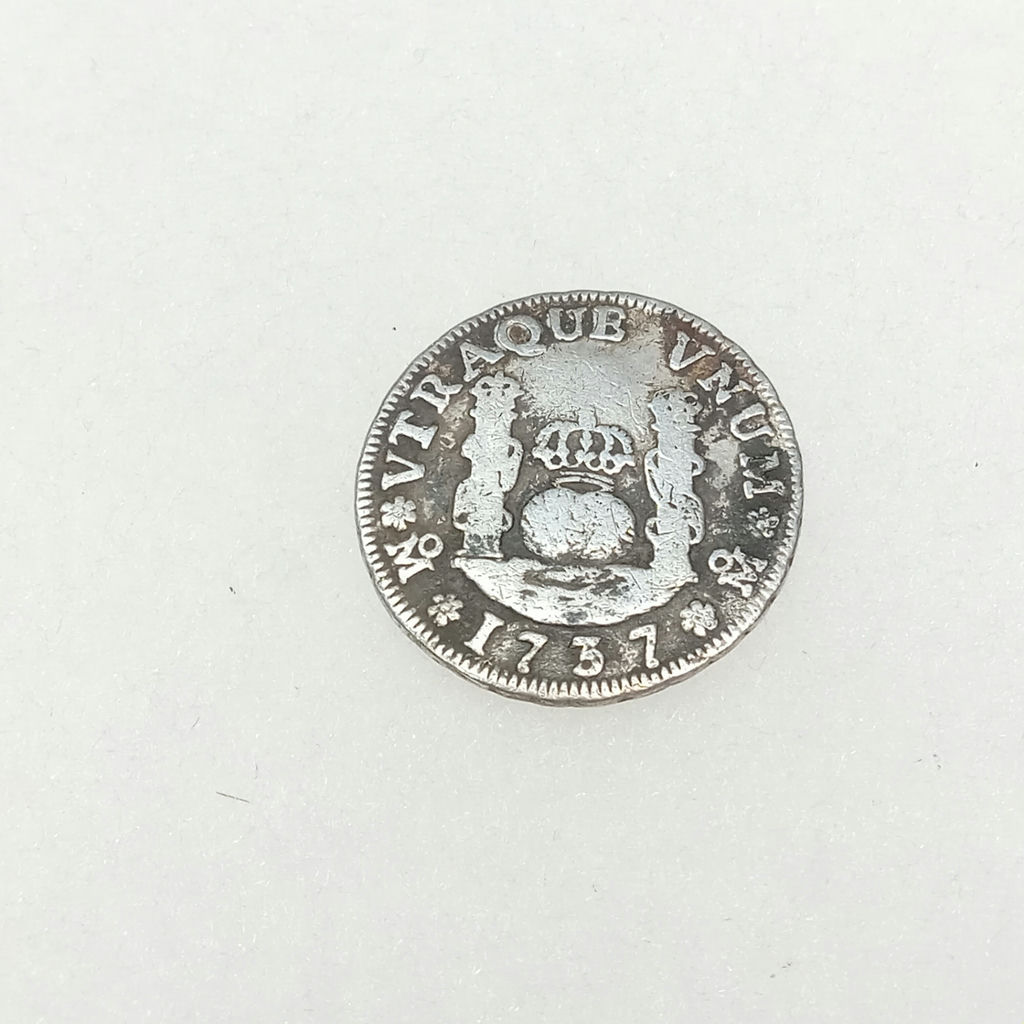
Lot 149: 1737 Spanish silver 1 real
Estimated melt value: US$6 (C$8)
Closing bid: US$70 (C$99)
Buyer total with 13% premium: US$79 (C$112)
Result: 1,390% of estimated melt value
Calculation note: 2 dwt at 91.7% silver. Buyers were purchasing a nearly 300-year-old collectible coin, not merely a small quantity of silver.
Excluded from this analysis: Lots 114, 115, 116, 118 and 132. The exclusions comprise sterling-handled flatware without a stated silver weight, two non-precious fashion lots, and two watches.
What the Results Say—and What They Do Not
The aggregate buyer total reached 85% of our estimated melt ceiling. That is not the same as saying every seller should accept 85 cents on the spot-price dollar. It is a comparison with a theoretical value that assumes catalog weights and purity descriptions convert cleanly into recoverable fine metal. In the real world, stones, cement-filled handles, clasps, solder, mixed materials, assay results, and refining loss matter.
It would also be misleading to describe spot as a price a wholesaler is likely to pay. The U.S. Commodity Futures Trading Commission explains that dealers generally sell metals above spot and buy them back below spot; the difference is the spread. A professional buyer needs that margin. An auction bidder buying a necklace to wear, a Cartier object to collect, or an antique coin for its history may not.
Where Direct Bidder Competition Added Value
Eleven lots cleared our melt estimate even after the buyer's premium. The most revealing examples:
- The Pat Flynn sterling and 18K brooch group reached 2,067% of the sterling-only melt floor. Its designer value and unquantified gold mattered far more than scrap math.
- The 1737 Spanish 1 real reached 1,390% of its estimated silver value which is a collector result, not a bullion result.
- The Cartier sterling shakers, Tiffany Money coin, and Shreve, Crump & Low coin all sold well above their silver value.
- The American Silver Eagle reached 136% of spot after the premium, reflecting a recognizable sovereign-mint product rather than undifferentiated silver.
This is the core seller advantage of a properly marketed online auction: the audience can contain both trade buyers and people willing to pay for the object itself. Wholesalers remain valuable bidders and help establish a price floor, but they are no longer the only possible exit. Melt value establishes the commodity value of the metal, but an auction allows end users and collectors to compete for the complete item—including its brand, craftsmanship, history, design and collectible value.
Why Some Lots Sold Below Theoretical Melt
Auction competition is not a promise that every lot will reach spot. In this sale, large sterling hollowware and several gold groups finished below the theoretical benchmark. Several factors can explain the gap:
- Conversion costs are real. Testing, shipping, insurance, refining, and market risk reduce what a trade buyer can offer.
- Buyers Need to Pickup Items in Person. Buyers take into account being able to come to pickup.
- Spot moved sharply. Gold and silver were at elevated levels, and buyers don't pay for speculation.
- Gross weight is not fine-metal weight. Jewelry and decorative objects can contain stones, liners, shell, mirror glass, solder, springs, blades, or weighted construction.
- Bid depth varies. A specialized coin or designer object may attract collectors; a very large silver service may have a narrower audience and a higher absolute purchase price.
Do BidRush Fees Leave Room for a Stronger Seller Return?
100% of the buyer's premium is retained by the partner, while BidRush charges 12% of the sold price and Stripe charges 2.9% of the invoice plus US$0.30. On a 13% buyer's premium, the buyer's premium adds partners added revenue so they can reduce fees for sellers.
Example using a US$1,000 (C$1,418) closing bid:
- Buyer total before tax: US$1,130 (C$1,603)
- Less BidRush fee: US$120 (C$170)
- Less Stripe percentage fee: approximately US$33 (C$46)
- Remainder: approximately US$977 (C$1,386) before the per-invoice charge and any auctioneer/client split
This illustration uses current public pricing. It does not reconstruct the private agreement between Lifecycle Pro and its consignor or establish the client's actual net. The important structural point is that the buyer's premium can fund much of the online selling infrastructure without requiring a conventional wholesale buyer's resale margin on every object.
Why This Matters in the Current Gold and Silver Market
Precious metals have been unusually visible to consumers. The World Gold Council reported a Q2 2026 average LBMA PM gold price of US$4,506 per ounce, 37% higher year over year, while noting that investment demand remains sensitive to interest rates and the U.S. dollar. The Silver Institute forecast a sixth consecutive annual silver-market deficit and a 20% increase in physical investment to 227 million ounces in 2026.
High prices create attention, but they also create confusion. Owners see a headline spot quote and may assume it is a standing cash bid for every ring, tray, coin, or flatware service. It is not. The best selling route depends on the object:
- Clearly marked bullion: compare transparent dealer buyback quotes with auction demand.
- Signed, antique, artistic, or collectible pieces: expose the object to collectors before treating it as scrap.
- Mixed estate groups: use accurate weights, purity, close-up photography, maker marks, and broad marketing to attract both consumers and the trade.
- Uncertain material: test and document it. Better information reduces bidder risk and can improve the result.
How Auction Results Compare With Refiners, Coin Shops and Estate Buyers
Melt value is the market value of the recoverable precious metal in an item. It is a useful benchmark, but it is not necessarily what a seller will receive. Buyers deduct varying amounts for testing, refining, handling, market risk and profit.
For jewelry, the relevant comparison is “percentage of melt value,” not simply percentage of spot price. Melt value already adjusts for purity—for example, 14K gold contains approximately 58.5% pure gold—and should exclude stones and non-precious components.
Large commercial refiners: Qualifying high-volume lots may receive approximately 90% to 98% of melt value, or 2% to 10% below melt. These rates frequently come with minimum quantities, assay fees and other requirements that individual estate sellers may not meet.
Smaller lots sold to a refiner: Consumer-sized shipments of gold jewelry or sterling silver may receive approximately 70% to 90% of melt value, or 10% to 30% below melt. Sterling flatware and mixed or difficult-to-process material can receive lower payouts.
Coin shops and bullion dealers: Recognizable gold and silver bullion may receive approximately 92% to 99% of spot value. Circulated silver coins and less-liquid products may receive approximately 85% to 95%, depending on demand and market conditions.
Specialist gold and estate-jewelry buyers: Competitive buyers may pay approximately 70% to 90% of melt value, or 10% to 30% below melt.
General jewelry buyers and wholesalers: Offers for mixed estate gold, silver and jewelry commonly fall around 60% to 85% of melt value, or 15% to 40% below melt. Quick-sale buyers may offer less, especially when items are unsorted, untested or purchased as one mixed estate lot.
Published payout schedules demonstrate how widely offers can vary. Dillon Gage publishes highly competitive refining terms for qualifying commercial lots but requires substantial minimum metal values. Arch Enterprises publishes payouts of 80% to 90% for gold jewelry, depending on volume, 70% for sterling flatware and 90% for common pre-1965 U.S. silver quarters and dimes.
Current consumer guidance on selling gold says sellers should reasonably expect more than 70% of melt value for scrap gold, while some highly competitive buyers advertise payouts of up to 90% for jewelry and 98% for bullion. The Commodity Futures Trading Commission also cautions that every precious-metals dealer establishes its own spread between the price at which it sells metal and the lower price at which it buys it back.
How the Carlisle auction compares
Across the 37 precious-metal lots analyzed, the rounded estimated melt-value ceiling was approximately US$46,260.
The lots generated US$34,963 in closing bids. After adding the 13% buyer’s premium, buyers committed approximately US$39,509 before tax — equal to 85.4% of the estimated melt-value ceiling.
The most important finding: An auction advantage is that collectors and end users can compete for the complete item—including its maker, craftsmanship, design, history, rarity and usefulness.
That distinction was visible in the Cartier shakers, Tiffany coin, antique Spanish coin, proof sets and several jewelry lots. A refiner values the recoverable metal. Competitive bidders can value everything else too.
Payout percentages change with quantity, metal purity, buyer competition and market conditions. Sellers should obtain multiple written offers and confirm whether each offer is calculated from gross weight, fine-metal content or independently tested recoverable metal.
The Takeaway for People Selling Gold and Silver
If speed and certainty are the only priorities, a reputable local buyer may be the right answer. But if the estate contains branded silver, antique coins, designer jewelry, or objects with value beyond their raw metal, a direct-to-consumer online auction deserves consideration.
This Carlisle sale did not turn every lot into more than melt. It did something more credible: it put the material in front of a market where end users could compete with resellers, produced above-melt results on 11 of 37 comparable lots, and brought the overall buyer commitment to 85% of a deliberately conservative melt ceiling during an exceptionally strong metals market.
Combined with a fee structure in which the buyer's premium can offset much of the platform cost, that is a persuasive model for improving a seller's opportunity for net return.
Considering an Auction for Gold, Silver, Jewelry, Coins, or an Estate Collection?
Ask for a clear explanation of the buyer's premium, seller fees, payment processing, cataloging, marketing, and how the auctioneer will separate collectible value from scrap value. The right comparison is not merely the closing bid versus spot—it is the seller's documented net versus the best realistic alternative offer.
Sources and Methodology
The auction ended on June 26, 2026, around 8:00 p.m. Eastern time. The closest well-sourced public market quote we found before the close was Reuters' June 26 report: approximately US$4,078 (C$5,783) per troy ounce for spot gold and US$59 (C$84) per troy ounce for spot silver.
Canadian-dollar equivalents use the June 26, 2026 Federal Reserve rate of C$1.4182 per US$1. Every monetary value below is rounded to the nearest whole dollar, so totals may differ slightly from calculations using the unrounded figures.
Fine metal ounces = pennyweight ÷ 20 × purity
Estimated melt value = fine metal ounces × spot price
Buyer total before tax = closing bid × 1.13
We used .925 for sterling silver, .999 where marked, .585 for 14K gold, .750 for 18K gold, and the cataloged fineness for coins. Taxes, shipping, and payment-method differences are excluded. Watches and non-precious-metal lots were omitted.
BidRush: Carlisle Estate Sale—lot descriptions, weights, closing bids, closing times, and 13% buyer's premium.
Reuters, June 26, 2026—spot gold and silver prices.
Federal Reserve H.10 Canadian-dollar exchange rates—June 26, 2026 USD/CAD rate.
U.S. CFTC physical-metals guidance—spot pricing and dealer spread.
BidRush pricing—current publicly posted platform and payment-processing fees.
World Gold Council: Gold Demand Trends Q2 2026—quarterly gold price and demand context.
Silver Institute: 2026 silver investment outlook—physical investment and market-deficit forecast.
This is an informational case study, not an appraisal, assay, guarantee of proceeds, or investment recommendation. Metal descriptions, purity, and weights are based on the auction catalog. “Spot at close” uses the closest retrievable public quote before the evening auction close; a continuously timestamped bid/ask feed was not available for this analysis.