
A real BidRush auction shows why bids often jump 3–4× in the final hour. One Poe book went from $51 mid-auction to $2,050 at close — and the data explains why.
Most first-time sellers panic halfway through an auction.
“Why is everything so low?”
“Are people even seeing this?”
And then, in the final hour — especially with extended bidding — everything changes.
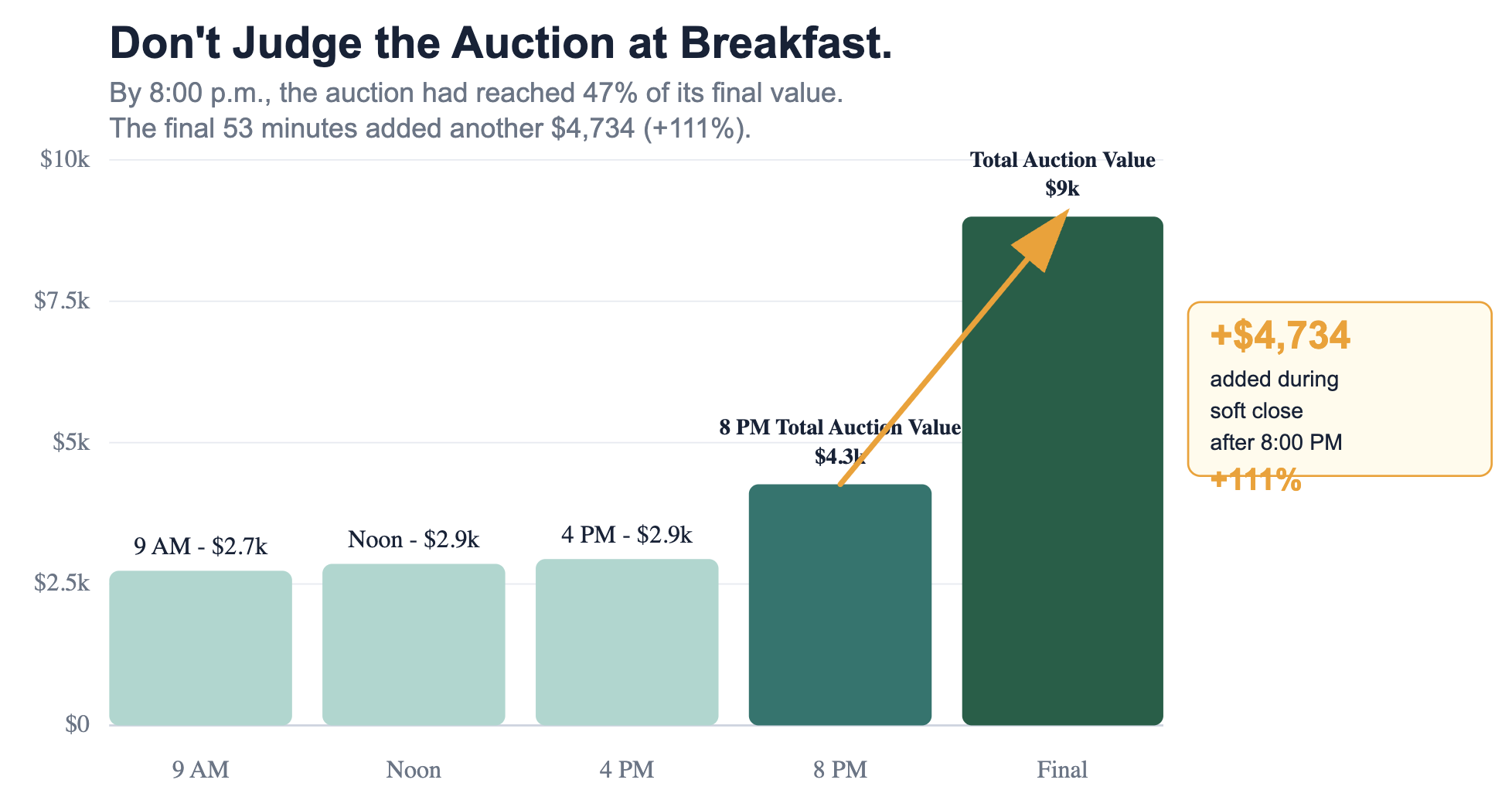
On BidRush, this pattern shows up again and again: total bids typically increase 3–4× in the final stretch.
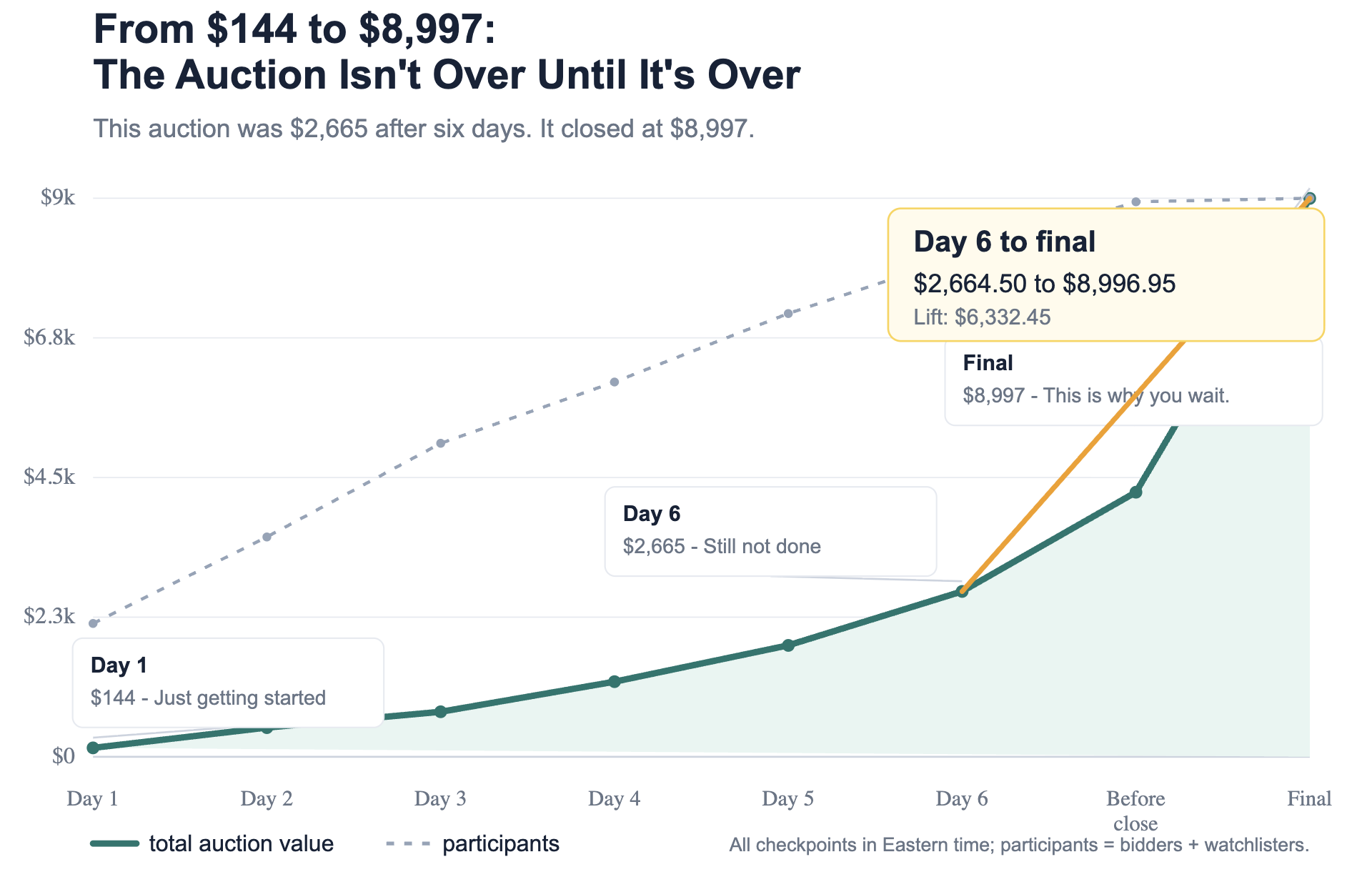
In one recent auction, here’s how total current bids progressed:
- Nov 14: $139
- Nov 15: $453
- Nov 16: $702
- Nov 17: $1,177
- Nov 18: $1,736
- Nov 19: $2,608
- Nov 20 (close): $8,885
From Nov 19 to closing day, bids jumped from $2,608 to $8,885 — a 3.4× increase.
This won't be the case for modest items; the platform doesn't do miracles. However, standout items will be discovered by bidders who are doing all the research leading up to the auction close.
- Same items.
- Same photos.
- Same descriptions.
Things jump in the last minute of the closing for any stand-out items, with several extension rounds.
The Poe Lot That Told the Whole Story
This lot captured this behavior perfectly: Poe’s Tales of Mystery & Imagination, illustrated by Arthur Rackham
Early on, it looked like a modest, quiet item.
- Nov 14: Opening bid at $1
- Nov 15: Incremental bids at $5 and $6
- Nov 16: A serious bidder stepped in at $51
- For several days, $51 was the high bid.
If you checked mid-auction, you would have reasonably assumed the book might close under $100. That assumption would have been very wrong.
Closing Night: Where the Auction Actually Happens!
Key facts:
- Total bids on the lot: 73
- Bids placed on closing day: 68
- Highest bid before closing day: $51
- Final hammer price: $2,050
That’s roughly a 40× increase from the earlier high bid.
In the final hour alone, the lot climbed from under $200 to $2,050 as multiple bidders went head-to-head. Each late bid extended the clock, allowing competitors time to respond and letting true market demand reveal itself.
What looked like a $51 book mid-week became one of the top-performing lots in the auction.
What Sellers Should Take Away
Low bids mid-auction are normal. In this auction, only 42% of items had bids on the first day. By closing, sell-through reached over 99%. Extended bidding works because it removes sniping, creates fair competition, and concentrates real decision-making into the final moments when urgency is real.
The last hour only delivers these results if buyers were already paying attention. Strong photos, clear titles, and accurate descriptions are what build watchlists days earlier so bidders are ready when it matters.
The Curve Is Supposed to Look Like This
- Flat.
- Flat.
- Flat.
- Spike.
Many auctions see 3–4× growth in the final hour. Some standout items, like the Poe book, see far more.