
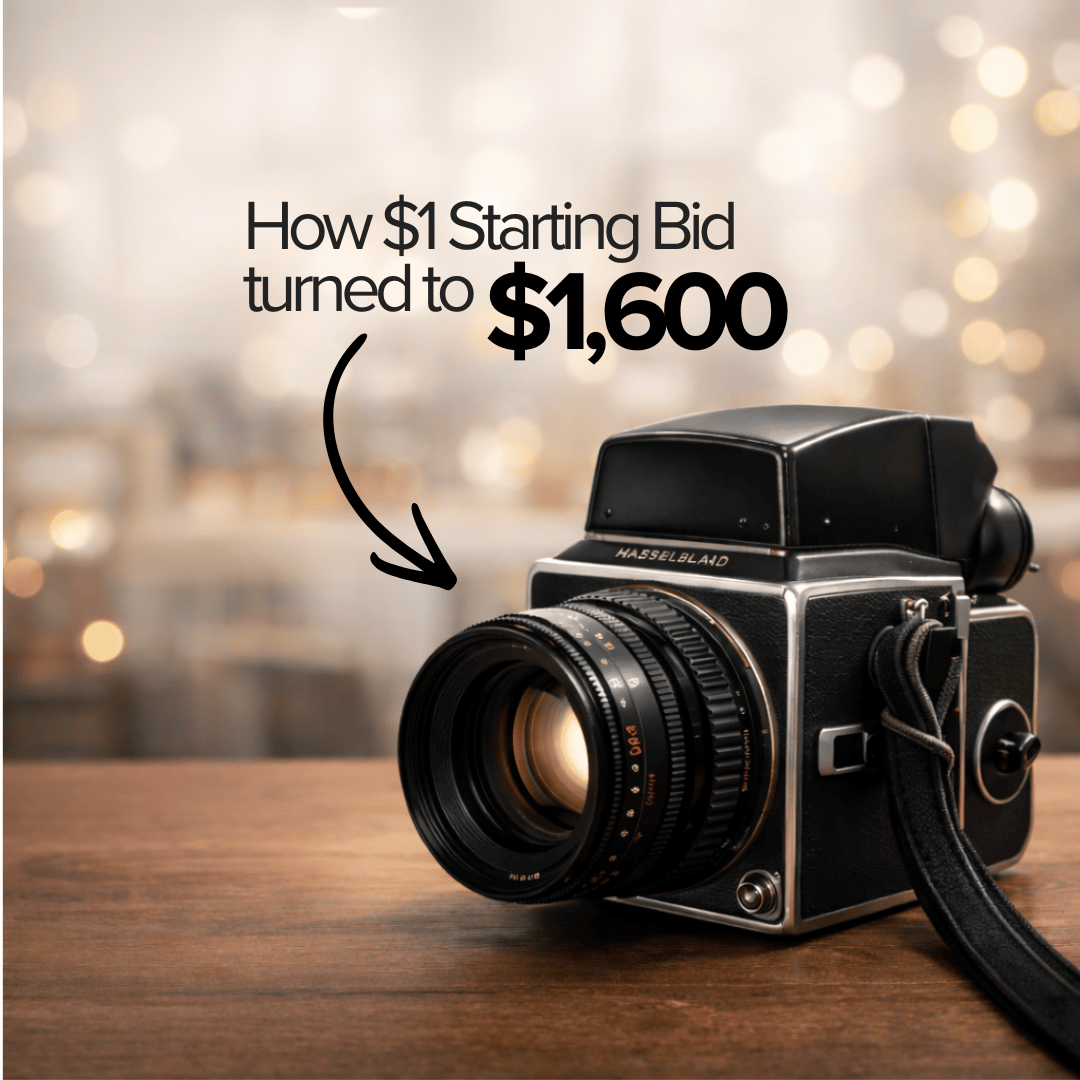
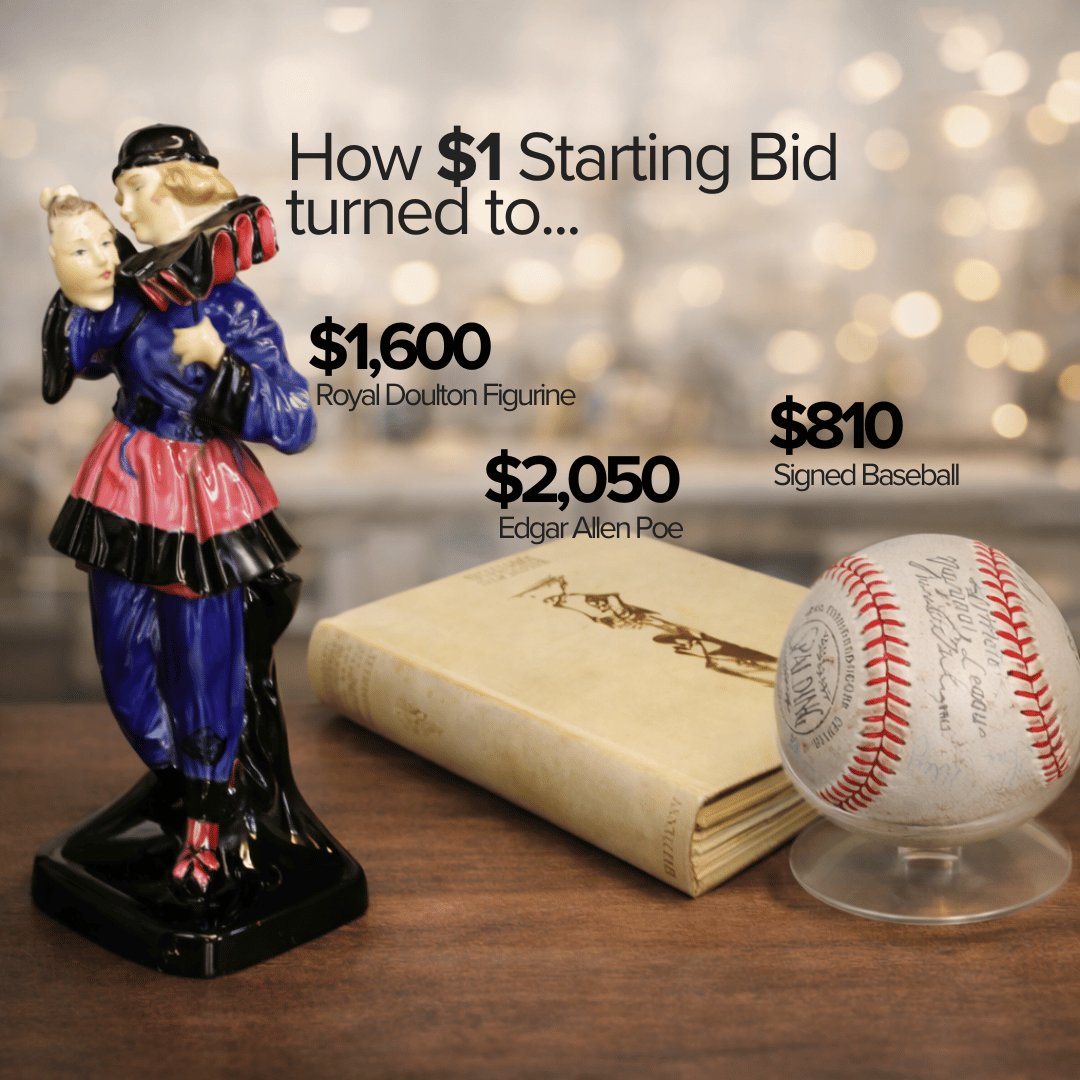
A recent Hasselblad medium-format camera sold for $1,600 (USD) on BidRush.
This isn't luck. BidRush demonstrated that it’s not about having thousands of buyers. It’s about the competition BidRush generates by targeting buyers in all the right channels, even in brand new markets.
It's also about what the seller actually keeps after the platform fees.
What Hasselblad Cameras Typically Sell For
Used Hasselblad cameras — particularly classic film models like the 500 series — typically trade in the $1,000 - $2,000 range depending on condition, lens, and configuration. On platforms like eBay, sold listings show wide variability (always check sold prices, not asking prices). Some close lower due to poor visibility or weak competition.
There is no “fixed” price in the used market. There is only the price that competition produces; and the seller cares mostly about clearing it out with minimal effort within their timelines.
And that’s what BidRush demonstrates.
You Don’t Need Thousands of Buyers. You Need Competition.
One of the biggest myths in online selling is that you need massive traffic to get strong results. You don’t.
You need:
- Two or three motivated bidders
- Who believe someone else might win
- And who compete
That dynamic — even between just a few buyers — is what pushes prices. The Hasselblad didn’t sell for $1,600 because there were 100,000 viewers. It sold for $1,600 because buyers competed on an easy to use platform. And that’s exactly what BidRush is designed to create — even in new markets we launch, where we generate competition even with the first auction.
The Hidden Variable: Fees
Now let’s talk about something sellers care about more than gross price:
What do you actually keep?
If a competitor takes 30%, and the seller wants to net the same $1,600…
We reverse the math:
Let X = hammer price
Seller keeps 70% of X
0.70X = 1,600
X = 2,285.71
That means:
👉 On a 30% commission platform, the item would need to sell for $2,286 just for the seller to net what they netted on BidRush.
That’s $686 higher, not accounting for the 18% "double dip" taken by the platform as Buyer's Premium.
And that assumes the same competition exists there.
Now Compare That to BidRush
On BidRush:
- Seller fees are significantly lower
- Sellers can offset fees with their own buyer’s premium
- In many cases, fees effectively go to zero
So when that Hasselblad sold for $1,600:
The seller kept essentially $1,600 (offsetting the fees with Buyer's Premium which the seller keeps). We've also seen bidders bid higher due to lower Buyer's Premiums.
Bidding on the Camera Started at $1
Sellers often worry about starting at $1.
But here’s the reality:
- Starting at $1 removes friction.
- It encourages early bids and creates momentum.
- Early bids create visibility.
- Visibility creates competition.
- Competition creates price discovery.
The Hasselblad result is proof of that.
You don’t need artificial reserves.
You don’t need inflated starting prices.
You need competition.
And BidRush has repeatedly proven it can generate that — even in new markets.
Confidence for Sellers in New Regions
If you’re in a city where BidRush is launching, here’s what matters:
✔️ You don’t need thousands of buyers.
✔️ You need competitive dynamics which BidRush drives.
✔️ And you need to keep what you earn.
The $1,600 Hasselblad sale and 1000s of products sold in markets BidRush entered demonstrates two things:
- Competition works.
- Lower fees matter even more than gross price.
Because at the end of the day, sellers don’t deposit “hammer price.”
They deposit what’s left after fees.
And in many cases, savings in fees is thousands of dollars per auction.
View results in these two markets BidRush launched - especially early results going back to the beginning to see our point: