
Lifecycle Pro recently completed a $49,164 (CAD $68,279) BidRush online auction (everything started at just $1 with no reserves). 100% sold and 327 participated.
Fee savings switching to BidRush? A whopping US$20,668 (CAD $28,703) in fees on this single auction!
The strongest companies do not defend the status quo, they challenge it. They continually ask whether the systems they use are delivering enough value for their business and their clients. That discipline is what keeps them competitive and relevant.
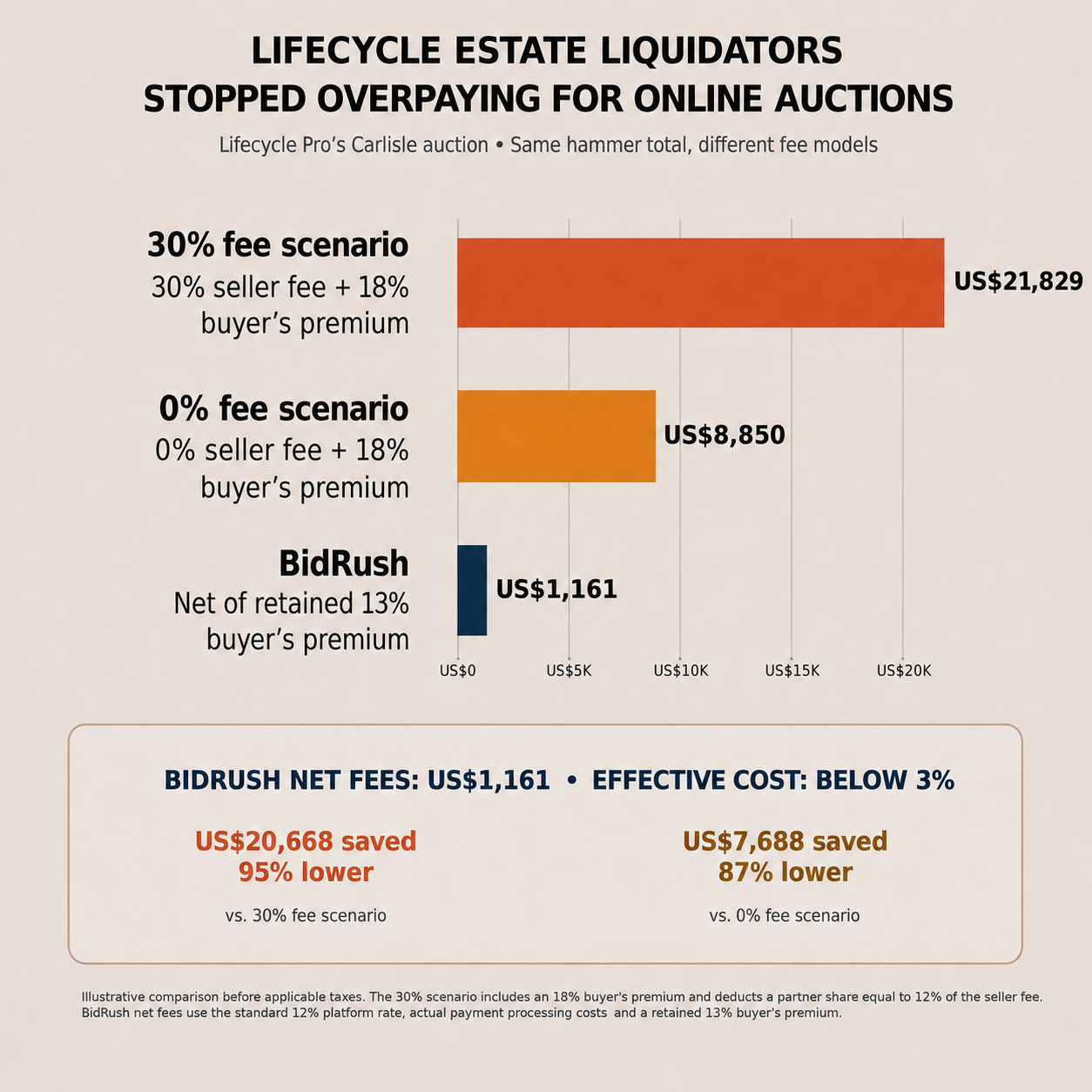
Lifecycle Pro asked that question and took action. Compared with its previous platform’s 30% seller-fee scenario, it reduced the effective cost of this auction by 95% (saving US$20,668 on a single auction). Even a 0% fee to switch back wouldn't have convinced them because with the 18% buyer's premium that the previous platform kept, they'd still save 87% (US$7,688).
At Lifecycle Pro’s current auction volume*, the projected impact is US$113,363 (CAD $157,439) annually compared with the previous platform’s 30% seller-fee scenario. Even compared with a 0% seller-fee scenario, Lifecycle Pro would save US$36,974 (CAD $51,349) annually (because the previous platform would still retain its 18% buyer’s premium.)
*Annualized from 17 auctions completed from September 25, 2025 through August 27, 2026 (337 days), using the standard 12% BidRush platform rate, actual payment-processing costs and the buyer’s premiums retained by Lifecycle Pro. The calculation includes the small amount of uncollected auction sales.
Very few business decisions create a change this significant, this quickly.
The real question is not whether switching platforms requires effort. It is how much maintaining the status quo is costing you and your clients every time you run another auction.
The final results from Lifecycle Pro's latest BidRush Auction:
US$49,164.25 sold (CAD $68,279)
327 auction participants
165 of 165 lots sold
100% sell-through
Net fees after the 13% buyer's premium kept by Lifecycle Pro: US$1,161.24 (an effective cost below 3%)
Savings in Fees Compared to the Previous Platform:
$20,668 (95% saved in fees) at 30% + 18% buyer's premium: ($21,828.93 - $1,161.24) / $21,828.93
$7,688 (87% saved in fees) even at 0% + 18% buyer's premium: ($8,849.57 - $1,161.24) / $8,849.57
Lifecycle Pro’s previous online auction platform uses a complicated and inconsistent seller-fee structure:
Depending on the customer and arrangement with the previous auction platform, seller fees are 30%, 15%, 6% or even 0%. In some arrangements, the auction company's “partner” could receive 6% or 12% of the platform’s seller-fee revenue (a percentage of the fee, not the total proceeds of the auction) which represented approximately 1.8% to 3.6% of auction proceeds.
For a $49,164.25 auction this would have equated to $21,828.93 in net fees at 30% (when also including the 18% buyer's premium which the previous platform kept.) The math: $49,164.25 proceeds times 30% + $49,164.25 proceeds times 18% buyer's premium less 12% of the 30% seller fee going to the partner ($49,164.25*30%*12%).
Even if the fees were "0%", it would equate to $8,849.57 in net fees due to the 18% buyer's premium. ($49,164.25 * 18% buyer's premium kept by the previous platform)
BidRush, however, has a transparent 12% platform fee, plus payment processing of 2.9% plus 30 cents an invoice - which total less than 16%. Partners choose their own buyer’s premium, and keep 100% of this as revenue for their business. For Lifecycle Pro, since they charge a 13% buyer's premium and keep 100%, this equates to $1,161.24 in net fees, an effective cost below 3%. The math: $5,899.71 in BidRush platform fees (12% of $49,164.25) + $1,638.06 in actual payment-processing costs - $6,376.53 in buyer's premium retained by Lifecycle Pro = $1,161.24. The retained premium is based on the collected hammer amount because no buyer's premium was collected on the small uncollected balance.
“We realized we were overpaying for online auctions relative to the value we were receiving. Our responsibility to our clients meant we needed to take a closer look at those costs. With BidRush, we set a reasonable 13% buyer’s premium and we retain 100% of it as revenue for the work our team performs. That retained premium offsets nearly all our BidRush platform and credit-card processing costs, bringing our effective auction cost below 3%. We have also gained greater control over our auctions, our brand, our marketing and our relationships with buyers. The auction results - and what we can return to our clients while retaining more revenue for our business speak for themselves.” - Jason Suderman, Lifecycle Pro Estate Liquidators (completed 17 auctions and over $267,000 in sales on BidRush from September 25, 2025 through August 27, 2026.)
The important question to consider is whether you are receiving enough value to justify what it pays, and whether the quoted seller fee tells the complete story. It usually does not.
The Buyer’s Premium Still Matters
Buyers were charged an 18% buyer’s premium on Lifecycle Pro’s previous platform. (unchanged when a customer’s seller fee was reduced to 15%, 6% or 0%)
Lifecycle Pro decided to look beyond any discounts they were offered and evaluate the complete economics: What do buyers pay? Who keeps the buyer’s premium? What value does the platform provide? What does the auction company ultimately retain? Who controls the auction, brand and buyer relationship?
Lifecycle Pro switched to BidRush after a hard look at not only the fee math but also the operational efficiencies gained from switching.
Every item was given the opportunity to find its market through competitive bidding, and every item sold well as there is no need for millions of buyers, just the right buyers!
Lifecycle Pro did not sacrifice auction performance by moving away from its previous platform’s variable-fee model. It also demonstrated that impressive platform metrics are simply vanity numbers. Saying two million buyers on the platform doesn't matter. What matters is if it attracted the right buyers.
Standout Auction Results
The auction included an impressive collection of gold jewelry, luxury names, sterling silver, collectibles, furniture and estate contents.
Among the leading results were:
 width="200">
Vintage 18K Gold Sputnik on a 14K Bracelet — Sold for US$4,650 (approximately CAD $6,458)
The auction’s highest-selling lot attracted 15 bidders and received 54 bids.
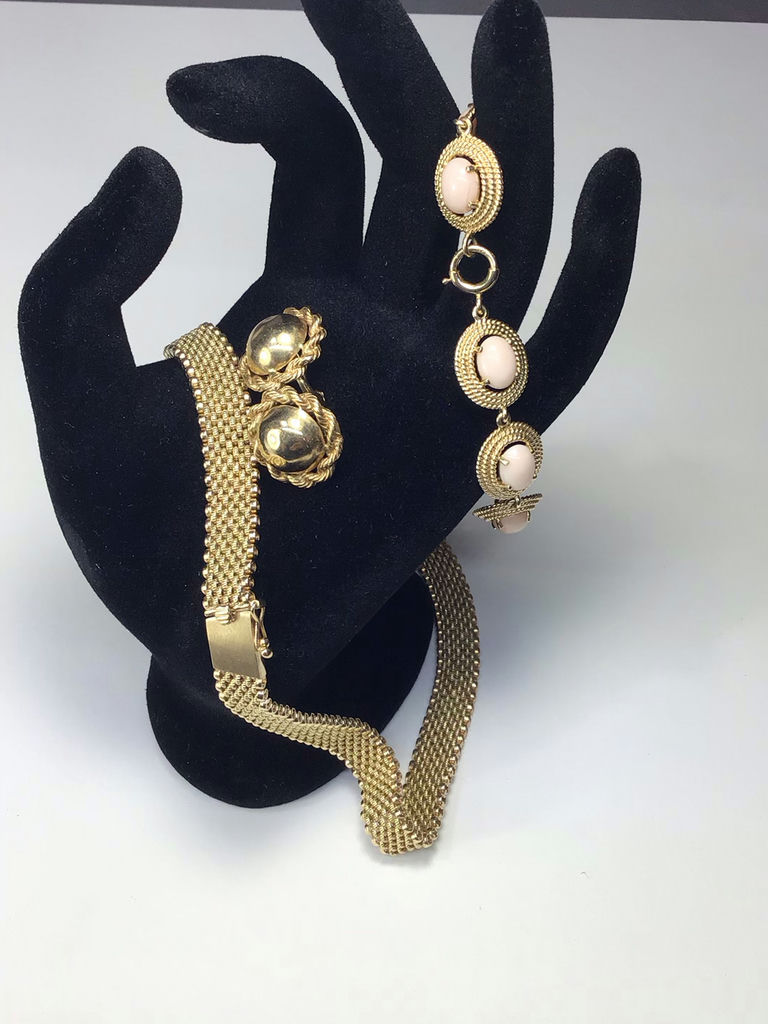
Vintage 14K Gold Jewelry Collection — Sold for US$4,300 (approximately CAD $5,972)
This substantial 45+ dwt jewelry grouping attracted 12 bidders.

18K Florentine Gold Bracelet and Gemstone Cocktail Ring — Sold for US$3,506 (approximately CAD $4,869)
Fourteen bidders competed for this 18K gold grouping, placing 45 bids.

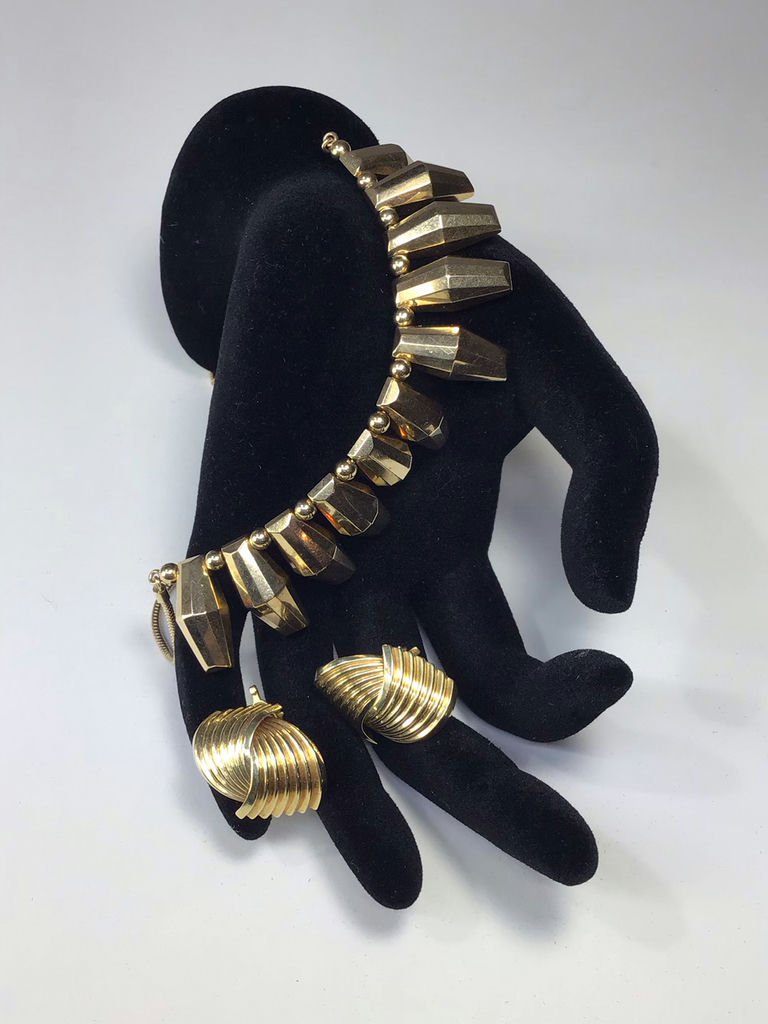
Vintage 14K Chunky Charm Bracelet — Sold for US$3,150 (approximately CAD $4,375)
This distinctive bracelet generated 45 bids from 11 bidders.
 width="200">
Why the Seller-Fee Percentage Never Tells the Whole Story
On Lifecycle Pro’s previous platform, one auction company might pay 30%, another 15%, another 6% and another nothing at all. But buyers were still charged an 18% buyer’s premium—and the platform kept it.
That creates two important questions:
If buyers reduce their bids because of a high premium, is the seller really paying nothing?
If the auction company creates the inventory, serves the client and performs the work, why should the platform keep the entire buyer’s premium?
The cost may not appear as a deduction from the seller’s proceeds. It may instead appear through the buyer’s total cost, bidding behaviour and the auction company’s lost opportunity to retain the premium as revenue.
Lifecycle Pro switched to BidRush and established a 13% buyer’s premium—a rate it believed was more reasonable for its bidders. More importantly, Lifecycle Pro keeps that buyer’s premium.
A discounted seller fee can be attractive, but it should not distract from the complete financial and operational picture.
How Lifecycle Pro’s Effective Cost Falls Below 3%
Lifecycle Pro’s BidRush economics are straightforward:
13% buyer’s premium retained by Lifecycle Pro
Less than 16% in total platform and payment costs
Less than 3% effective cost after applying the retained buyer’s premium
What the Switch Changed for Lifecycle Pro
The value of the switch is not simply a list of software features. It is what those capabilities allow Lifecycle Pro to do for its business and clients for better operational efficiency:
- Publish and update auctions (even when auction is live) without waiting on the platform
- Set a buyer’s premium that works for its bidders and business
- Keep the buyer’s premium as revenue instead of giving it away
- Build the Lifecycle Pro brand with every auction (BidRush marketing promotes your brand)
- Direct access to buyers for smoother pickups
- Innovative features such as 'giveaways' (to easily handle any unsolds), 'second chance' to offer any lots not picked up to underbidders, and fully integrated (optional) shipping features
"BidRush has carved out its own category in the Online Auction space. It's an innovative model that gives professional senior move managers, professional organizers and estate liquidators greater control over their revenue, buyers, brand and client experience. Honestly, there is no comparison." says Jason Suderman of Lifecycle Pro who completed 17 auctions and over $267,000 in sales on BidRush from September 25, 2025 through August 27, 2026.
Are You Receiving the Same Value for What You Pay?
If your auction company is paying a substantially higher seller fee than other customers, giving away its buyer’s premium or losing control of its bidders, it may be time to examine what your current platform is really costing you.
If you are hesitant about switching to BidRush, give Jason Suderman a call.
CAD equivalents are approximate and based on the Bank of Canada daily exchange rate of US$1 to CAD $1.3888 on August 28, 2026.